
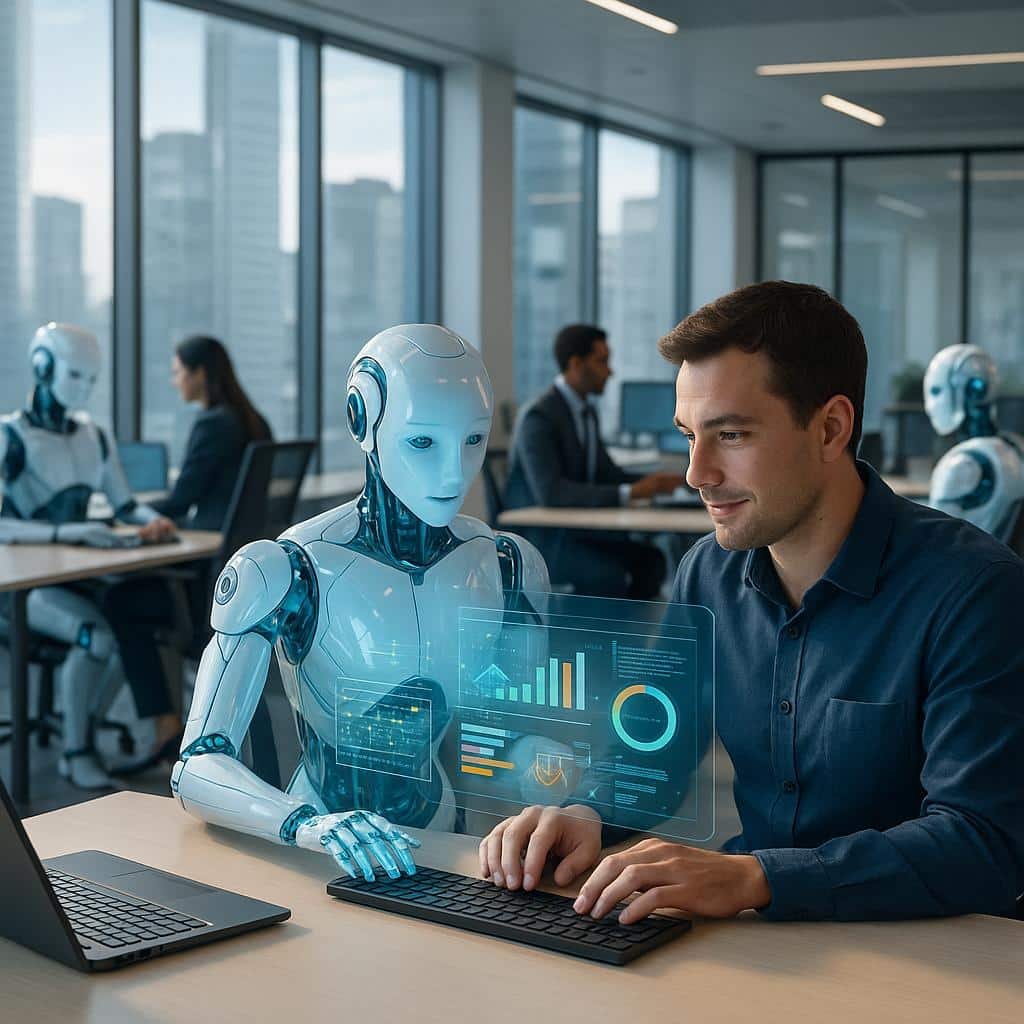
Which Career Is Most Likely to Survive AI? Top 10 Careers That Will Remain Valuable in the Future
Artificial intelligence (AI) is changing the way people work, businesses operate, and economies grow. From automated customer service and content creation to advanced data analysis and software development, AI is increasingly capable of performing tasks that once required human employees.
As companies continue adopting AI technology, many workers are becoming concerned about their career security. Some traditional jobs may disappear, while others will change significantly. At the same time, new career opportunities are emerging in technology, healthcare, education, engineering, and other industries.
But which careers are most likely to survive the growth of artificial intelligence?
Although no profession is completely protected from technological change, careers that require human judgement, emotional intelligence, physical skills, creativity, and complex problem-solving may be more resilient to automation.
In this article, we explore ten careers that could remain valuable in an AI-driven economy and explain why developing the right skills is important for the future of work.
1. Healthcare Professionals – Doctors and Nurses
Healthcare is one of the industries where human expertise and personal interaction remain essential.
Although AI can analyse medical images, assist with research, and support disease detection, healthcare professionals are still needed to examine patients, make treatment decisions, provide emotional support, and manage complex medical situations.
Doctors, nurses, surgeons, and other medical professionals combine technical knowledge with human judgement and responsibility.
AI may become a valuable assistant in hospitals, helping medical teams work more efficiently. However, it cannot fully replace the human relationships involved in patient care.
As populations grow and healthcare needs increase, medical professionals are likely to remain important in the future.
2. Electricians, Plumbers, and Skilled Tradespeople
Skilled trades are among the careers that may be relatively difficult to automate completely.
Electricians, plumbers, mechanics, construction workers, and heating technicians perform physical tasks in environments that require practical experience, problem-solving, and adaptability.
For example, an electrician may need to diagnose an unexpected electrical problem in an old building. A plumber may have to identify and repair a complicated leak in a difficult location.
These situations require physical work and practical judgement that current AI software cannot perform independently.
Although robotics may eventually automate certain construction and maintenance activities, skilled tradespeople are likely to remain valuable because of their ability to handle unpredictable real-world situations.
3. Teachers and Education Professionals
Education is another career area where human involvement remains important.
AI tools can help students learn, generate educational materials, explain difficult concepts, and support teachers with lesson preparation.
However, effective teaching involves much more than providing information.
Teachers motivate students, understand individual learning challenges, encourage curiosity, develop communication skills, and help young people build confidence.
Special education teachers and learning support professionals also provide individual attention that requires patience and human understanding.
In the future, teachers who understand how to combine AI technology with effective teaching methods may become especially valuable.
4. Mental Health Professionals and Counsellors
Mental health professionals help individuals manage emotional difficulties, personal challenges, relationship problems, and psychological conditions.
Although AI chatbots can provide basic information and general support, professional counselling involves empathy, trust, confidentiality, ethical responsibility, and an understanding of individual experiences.
Psychologists, therapists, social workers, and counsellors must often respond to complex human emotions and changing personal circumstances.
These responsibilities make mental health careers relatively difficult to automate completely.
As awareness of mental health increases, demand for qualified professionals may continue to grow.
5. Cybersecurity Professionals
As businesses become increasingly dependent on digital technology, protecting sensitive information and computer systems becomes more important.
Cybersecurity professionals help organisations defend against hacking, identity theft, ransomware, data breaches, and other digital threats.
AI can assist security teams by identifying unusual network activity and detecting potential cyberattacks. However, criminals can also use AI to develop more sophisticated attacks.
This creates a continuing need for cybersecurity specialists who understand technology, investigate threats, assess risks, and develop security strategies.
Career opportunities include security analysts, penetration testers, security engineers, and incident response specialists.
Cybersecurity is particularly interesting because the technology creating new risks is also increasing demand for people who can manage them.
6. Artificial Intelligence and Machine Learning Specialists
One of the most interesting consequences of AI development is the growing demand for professionals who build, manage, and improve AI systems.
AI engineers, machine learning specialists, data scientists, and AI researchers help organisations develop intelligent software and integrate AI into business operations.
These professionals work on areas such as machine learning models, data processing, automation, natural language processing, and robotics.
As more companies adopt AI technology, specialists who understand how to develop, evaluate, and responsibly manage these systems may become increasingly valuable.
However, these careers require continuous learning because AI technology changes rapidly.
7. Engineers and Robotics Specialists
Engineering remains an important career area because modern economies depend on infrastructure, manufacturing, transportation, energy, and advanced technology.
Mechanical, electrical, civil, and robotics engineers design, develop, test, and maintain complex systems.
AI can assist engineers with calculations, simulations, design processes, and identifying technical problems. However, human engineers remain responsible for interpreting requirements, making important decisions, managing safety, and overseeing real-world projects.
The expansion of automation, renewable energy, electric vehicles, and advanced manufacturing could also create new engineering opportunities.
Professionals who combine engineering knowledge with AI skills may have particularly strong opportunities.
8. Emergency Services and Public Safety Professionals
Firefighters, emergency medical technicians, police officers, and rescue professionals perform duties that require immediate physical action and complex decision-making.
These careers often involve unpredictable situations where people must assess risks, communicate with others, and respond quickly.
AI can assist emergency services through surveillance analysis, emergency forecasting, communication systems, and resource management.
However, responding to accidents, rescuing people, and managing emergencies still require human judgement, physical abilities, and responsibility.
These characteristics make emergency services difficult to automate completely.
9. Creative Professionals and Strategic Designers
Many people believe AI will completely replace creative careers, but the reality is more complicated.
AI can generate images, write articles, create music, and assist with video production. However, successful creative work often requires understanding people, culture, emotions, brand identity, and business objectives.
Creative directors, experienced designers, filmmakers, marketing strategists, and brand consultants provide ideas and decisions that go beyond producing content.
Professionals who learn to use AI as a creative assistant rather than compete with it directly may become more productive and competitive.
The future of creative careers will likely involve a combination of human originality and AI-supported production.
10. Renewable Energy and Environmental Specialists
The global shift towards cleaner energy is creating opportunities in renewable energy, environmental protection, and sustainable infrastructure.
Solar energy technicians, wind turbine engineers, environmental scientists, and energy specialists help businesses and governments develop sustainable systems.
AI can support energy forecasting, monitor equipment, optimise electricity distribution, and analyse environmental information.
However, installing renewable energy equipment, inspecting infrastructure, conducting field research, and managing complex environmental projects require specialised human expertise.
As countries invest in energy infrastructure and sustainability, these careers may offer important long-term opportunities.
What Makes a Career More Resistant to AI?
The careers most likely to remain valuable often share several characteristics.
Human interaction: Jobs involving empathy, communication, trust, and personal relationships can be difficult to automate completely.
Physical skills: Work involving hands-on activities in unpredictable environments remains challenging for software-based AI systems.
Complex decision-making: Careers requiring professional judgement, responsibility, and understanding of complicated situations are less suitable for full automation.
Creativity: Original thinking, strategic planning, and understanding human preferences remain important business skills.
Adaptability: Professionals who learn new technologies and adjust to changing working environments may have better career opportunities.
The International Labour Organization’s 2025 research estimates that one in four workers globally is in an occupation with some exposure to generative AI. However, it also explains that exposure does not automatically mean a job will disappear. Many occupations are more likely to experience changes in their tasks than complete replacement.
How to Prepare Your Career for the Future of AI
Rather than focusing only on jobs that AI cannot perform, workers should develop skills that make them more valuable in an AI-powered workplace.
Start by learning how to use AI tools relevant to your profession. Improve communication, critical thinking, creativity, and problem-solving abilities. Consider gaining technical knowledge or professional qualifications that can strengthen your career opportunities.
The World Economic Forum’s Future of Jobs Report 2025 identifies AI and big data, cybersecurity, technological literacy, creative thinking, resilience, and lifelong learning among the skills expected to become increasingly important through 2030.
Combining professional experience with digital knowledge can help workers adapt to new opportunities.
Conclusion
Artificial intelligence is transforming the global employment market, but it does not mean that all human careers will disappear.
Healthcare professionals, skilled tradespeople, teachers, cybersecurity specialists, engineers, counsellors, and renewable energy experts are examples of careers that may remain valuable because they involve important human, physical, technical, and decision-making abilities.
However, even these professions will continue changing as AI becomes more widely adopted.
The most successful professionals in the future may not necessarily be those who avoid artificial intelligence. They may be the people who learn how to work alongside it.
Rather than asking which jobs AI cannot replace, a better question is which skills will make you valuable in an economy increasingly powered by intelligent technology.
Disclaimer: This article is for educational and informational purposes only. Career demand varies by country, industry, qualifications, and economic conditions. No profession is guaranteed to remain unaffected by technological change.
Frequently Asked Questions
1. Which career is safest from AI?
No career is completely safe from AI. However, healthcare, skilled trades, teaching, mental health services, and emergency response involve human interaction, physical skills, and complex judgement that make full automation more difficult.
2. Will AI replace doctors and nurses?
AI will increasingly assist medical professionals with diagnosis, research, and administrative work. However, patient care, medical judgement, treatment decisions, and human communication will continue to require qualified professionals.
3. Are technology careers safe from artificial intelligence?
Technology careers will change as AI automates certain programming and technical tasks. However, cybersecurity, AI engineering, robotics, and technology management may create new opportunities.
4. Which skills should students learn for the future?
Students should develop digital literacy, AI knowledge, critical thinking, communication, creativity, problem-solving, and adaptability.
5. Will AI replace teachers?
AI can assist with lesson preparation, personalised learning, and educational resources. However, teachers provide mentorship, emotional support, motivation, and classroom guidance that technology cannot fully replace.
6. What is the best career to choose in an AI-driven world?
The best career depends on your interests, abilities, and local employment opportunities. Healthcare, engineering, cybersecurity, skilled trades, and AI-related professions are worth exploring for their different opportunities.

Faiz Malik is the founder of Moneydigitals, where he simplifies stock market, crypto, and global investing for beginners. His mission is to help people build wealth smartly with practical insights and real-world strategies.