
Why the 2026 Oil Spike is Not Just Another Market Fluctuation: A Reality Check
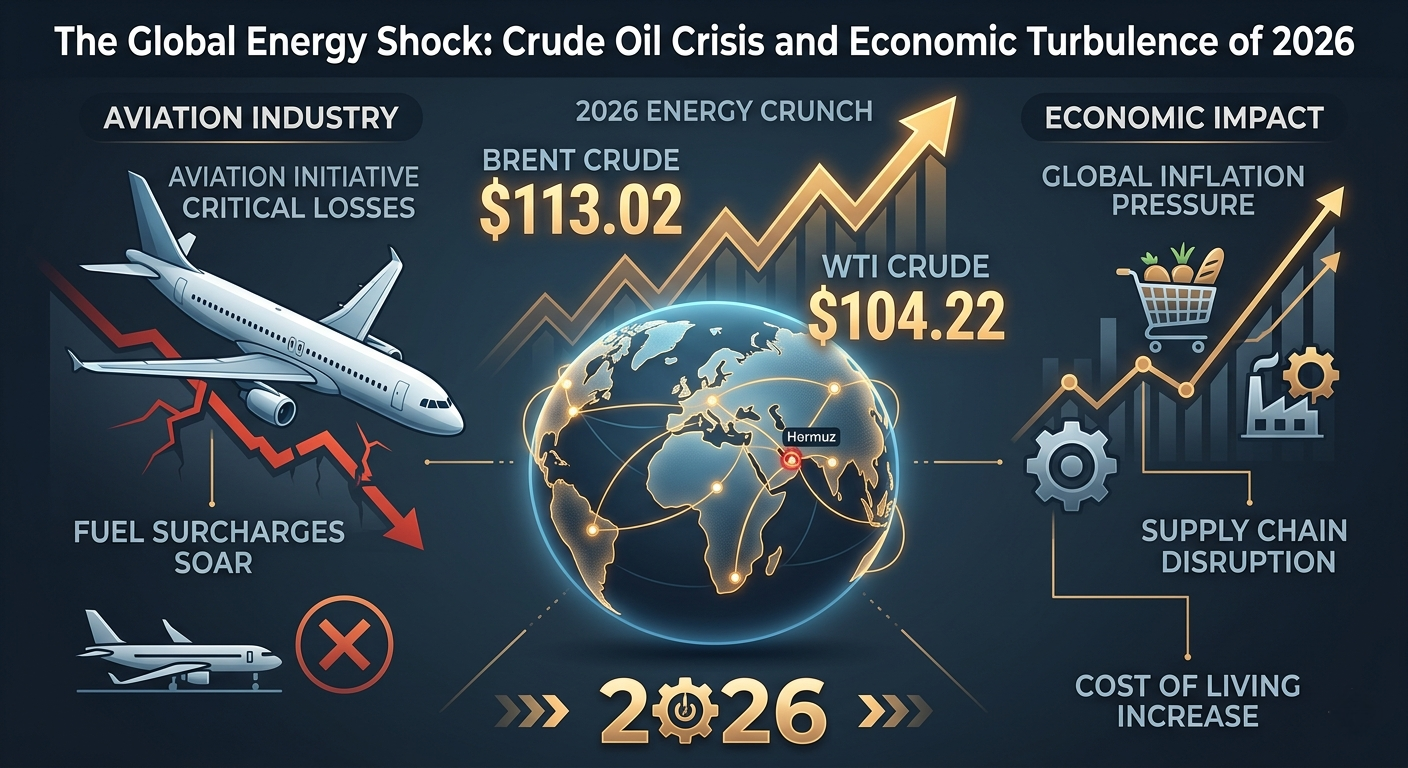
If you have filled up your car’s tank or booked a flight ticket in the last forty-eight hours, you already know the painful truth. You don’t need a Wall Street analyst to tell you that something is fundamentally broken in the global energy market. As we sit here on May 5, 2026, the price of crude oil isn’t just a number on a screen anymore; it’s a massive weight on the shoulders of the average person. Brent Crude is hovering around $113, and WTI is stubbornly stuck above $104. For most of us, this translates to one simple, brutal reality: everything is about to get a lot more expensive.
Let’s talk about why this is happening. We’ve seen oil spikes before, like in 2008 or 2022, but 2026 feels different. It’s not just about one war or one supply line. It’s a messy combination of things. The tension in the Middle East, specifically the shadow looming over the Strait of Hormuz, has traders terrified. But beyond the headlines, we are paying the price for a decade of ignoring our energy infrastructure. We stopped investing in refineries, we relied too heavily on “just-in-time” supply chains, and now, the bill has finally come due.
The Aviation Disaster: Why Your Summer Plans are Evaporating
The first place most people are feeling this “oil fever” is at the airport. I was looking at some industry data this morning, and the numbers are honestly frightening. For an airline, fuel isn’t just a cost—it’s the biggest gamble they take. When jet fuel prices double in a matter of months, the business model literally collapses. We are seeing major carriers across the globe, especially in India and Europe, reporting losses that sound like phone numbers. In India alone, the aviation sector is staring at an ₹18,000 Crore hole in their pocket for 2026.
What does this mean for you? It means “Fuel Surcharges” are back with a vengeance. That flight you wanted to take to London or Dubai? The base fare might look okay, but once you add the taxes and the fuel adjustment, you’re paying double what you would have paid last year. Airlines are cutting routes that aren’t 100% full because they simply cannot afford to fly half-empty planes with $113 oil. It’s a survival game now, and unfortunately, the passenger is the one keeping them afloat with higher fares.
The Invisible Chain: From Petrochemicals to Your Plate
Most people don’t realize how much oil they “eat.” Think about it: the fertilizer used to grow your wheat, the plastic packaging for your milk, and the truck that brought those groceries to your local store—all of them depend on the price of a barrel in the Middle East. This is why we are seeing “inflation” become a household word again. When transportation costs go up, manufacturers don’t just eat the loss; they pass it on to the consumer. That’s why your grocery bill is up 20% even if you don’t own a car. The logistics of moving food are becoming prohibitively expensive, and this is creating a social crisis in developing nations where people spend half their income just to stay fed.
Is There Any Light at the End of the Tunnel?
Every time oil hits $100, everyone starts talking about Electric Vehicles (EVs) and green energy. And honestly, this might be the only “silver lining” of the 2026 crisis. We are seeing a massive shift in how people think about cars. If gas stays at these record highs, the “luxury” of an EV becomes a “necessity.” But let’s be real: you can’t switch the whole world to electricity overnight. We still need ships to move cargo, and we still need planes to cross oceans—and for now, those things need oil. The transition is happening, but it’s going to be a long, bumpy, and expensive ride.
Looking ahead to the rest of 2026, I wish I had better news. Some experts are hopeful that prices will settle back to $90 if the geopolitical heat cools down. But if things escalate? We could be looking at $150 oil. That is a territory we have never truly explored, and it’s a scenario that could lead to a global recession. For now, the best we can do is watch the markets, tighten our belts, and hope that the “black gold” stops being such a heavy burden on our daily lives.
Final Thoughts: The 2026 oil crisis is a reminder of how fragile our global system really is. We are all connected by a few dollars’ difference in a barrel of oil, and until we find a more stable way to power our world, we are all just along for the ride.

Faiz Malik is the founder of Moneydigitals, where he simplifies stock market, crypto, and global investing for beginners. His mission is to help people build wealth smartly with practical insights and real-world strategies.