
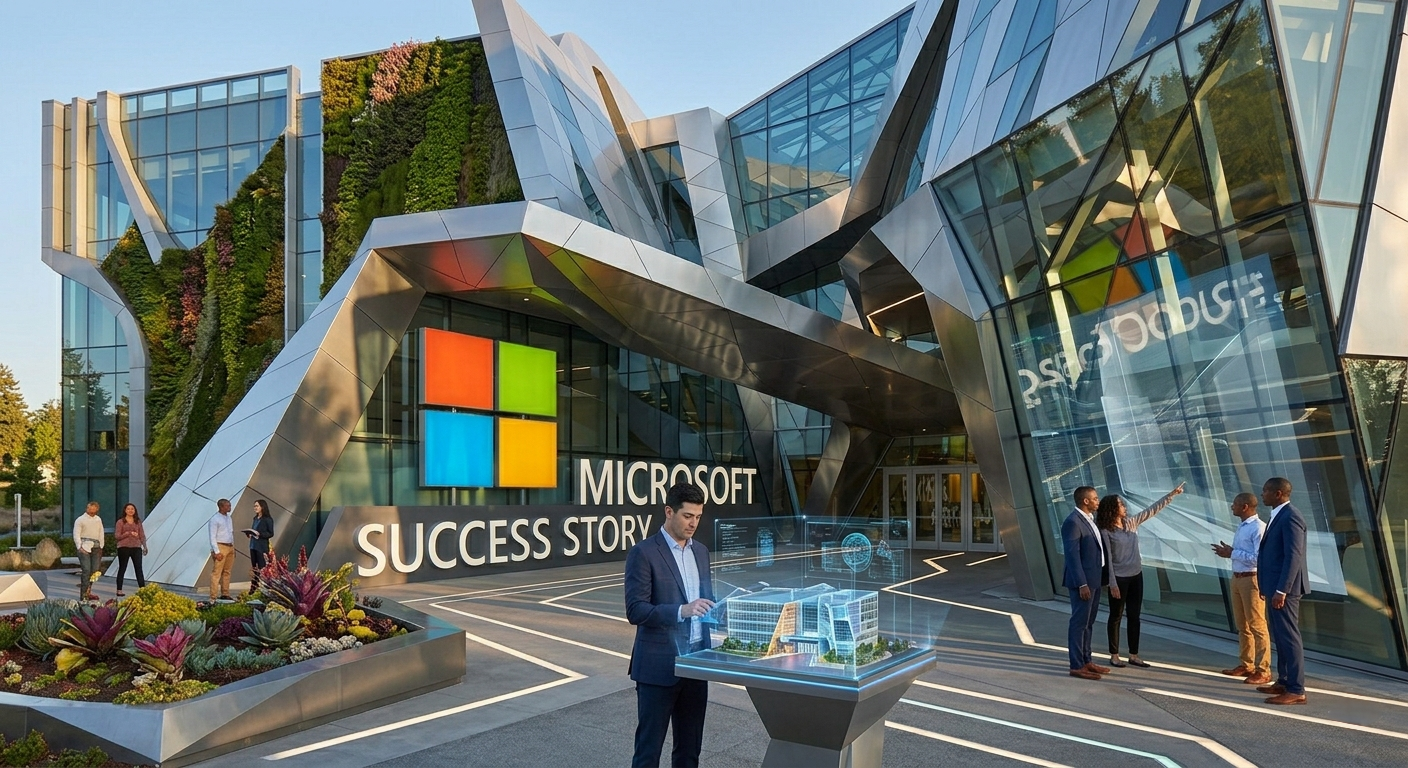
The Microsoft success story is a perfect example of hard work and vision.
1. The Humble Beginnings (1975–1980)
The story of Microsoft is not just about a company; it’s a story about a vision that seemed impossible at the time. In 1975, computers were massive, room-sized machines owned only by governments and giant corporations. But two childhood friends, Bill Gates and Paul Allen, saw something different. They envisioned a world where every desk and every home had a personal computer.
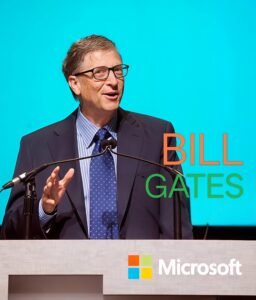
They started “Micro-Soft” (later shortened to Microsoft) in Albuquerque, New Mexico. Their first project was writing a version of the BASIC programming language for the Altair 8800. In those early days, they were working out of a small garage, often sleeping under their desks. Bill Gates. https://www.microsoft.com was known for his intense work ethic, sometimes staying awake for 36 hours straight just to finish a piece of code.
2. The Struggle and the “IBM Jackpot”
In the late 70s, Microsoft wasn’t the giant it is today. They were struggling with software piracy—people were copying their code without paying. Gates famously wrote an “Open Letter to Hobbyists,” telling them that stealing software would stop people from making good programs. It was a tough battle to convince the world that software had value.
The real game-changer came in 1980. IBM, the biggest hardware company, needed an operating system for its new PC. Microsoft didn’t actually have one, so they bought a system called QDOS for $50,000, refined it, and renamed it MS-DOS. But here’s the “human genius” part: Bill Gates refused to sell the code to IBM. Instead, he licensed it. This meant every time an IBM PC (or any PC clone) was sold, Microsoft got paid. This single decision created the foundation of their multi-trillion-dollar empire.
https://www.microsoft.com
3. Dominating the 90s: Windows and the Office Revolution
By the 1990s, Microsoft had become a household name. With the launch of Windows 95, computing became “visual.” You didn’t need to type commands anymore; you could just click. The hype was so huge that people stood in lines at midnight just to buy a copy of Windows.
Then came Microsoft Office. By bundling Word, Excel, and PowerPoint together, Microsoft created a toolset that became the “oxygen” of the business world. If you wanted to work in an office, you had to know Microsoft. This created a “Moat”—a business advantage so strong that competitors like Apple struggled to keep up for nearly two decades.
4. Market Analysis: How Microsoft Analyzes the World
Microsoft doesn’t just make software; it analyzes the global market like a grandmaster plays chess. Their strategy is based on three main pillars:
- Platform Lock-in: By making their software the standard in schools and offices, they ensure that the next generation is already trained on their tools.
- Diversification: When they saw social media growing, they bought LinkedIn. When they saw gaming becoming a billion-dollar industry, they built Xbox and bought Activision Blizzard. They don’t put all their eggs in one basket.
- Enterprise Trust: Unlike some tech giants that focus on teenagers, Microsoft focuses on the “Big Players”—governments, banks, and hospitals. They provide security and reliability that big organizations are willing to pay billions for.
Today, Microsoft’s market analysis is driven by “Big Data.” They use their cloud platform, Azure, to monitor global trends in real-time. If they see a rise in remote work, they push Teams. If they see a rise in coding, they buy GitHub. They are always two steps ahead of the trend.
5. The Future: 2026 and the Age of “Agentic AI”
As of May 2026, Microsoft has moved beyond being just a software company. They are now the world’s leading AI Orchestrator. The future they are building is incredibly advanced and is divided into three major tech frontiers:
A. From AI Tools to AI Partners (Copilot 2.0)
In 2026, we are no longer just “using” AI; we are “partnering” with it. Microsoft’s Copilot has evolved into Agentic AI. This means the AI doesn’t just wait for you to type a prompt. It observes your work, predicts what you need, and completes tasks autonomously. For example, it can attend a meeting for you, summarize the key points, and draft the follow-up emails without you even asking.
B. Quantum Computing: The 250-Year Leap
Microsoft is currently building a Quantum Supercomputer. While today’s computers use bits (0s and 1s), Quantum computers use “Qubits.” This technology is so advanced that it can solve problems in minutes that would take a normal computer 10,000 years to solve. By late 2026, Microsoft aims to use this power to discover new medicines and materials that could solve climate change.
C. The “Industrial Metaverse”
Forget about cartoon avatars. Microsoft is using HoloLens and Digital Twins to create an Industrial Metaverse. Engineers in India can wear a headset and “walk inside” a factory engine located in Germany to fix it virtually. This “Remote Presence” technology is changing how global manufacturing works.
6. Microsoft’s Global Standing in 2026
Today, Microsoft sits comfortably as one of the top 5 most valuable companies on Earth, with a market cap hovering around $3 Trillion.
- The Satya Nadella Effect: Under his leadership, the company’s culture shifted from “know-it-all” to “learn-it-all.” This mindset allowed them to partner with OpenAI (the creators of ChatGPT) and beat giants like Google in the AI race.
- Sustainable Tech: By 2026, Microsoft is on track to be “Carbon Negative.” They aren’t just making money; they are investing billions into removing more carbon from the atmosphere than they emit.
Conclusion: A Legacy of Adaptation
Microsoft’s journey from a garage to a $3 trillion AI powerhouse is a lesson in persistence and adaptation. They didn’t survive by doing the same thing; they survived by reinventing themselves every decade. Whether it was the transition from MS-DOS to Windows, or from desktop to Cloud, or now from Cloud to AI—Microsoft knows how to pivot.
For any blogger or entrepreneur, Microsoft’s story is proof that you don’t need to be the first to invent something; you just need to be the best at scaling it and making it useful for the world. In 2026, the windows to the future are wide open, and Microsoft is the one holding the keys.

Faiz Malik is the founder of Moneydigitals, where he simplifies stock market, crypto, and global investing for beginners. His mission is to help people build wealth smartly with practical insights and real-world strategies.