
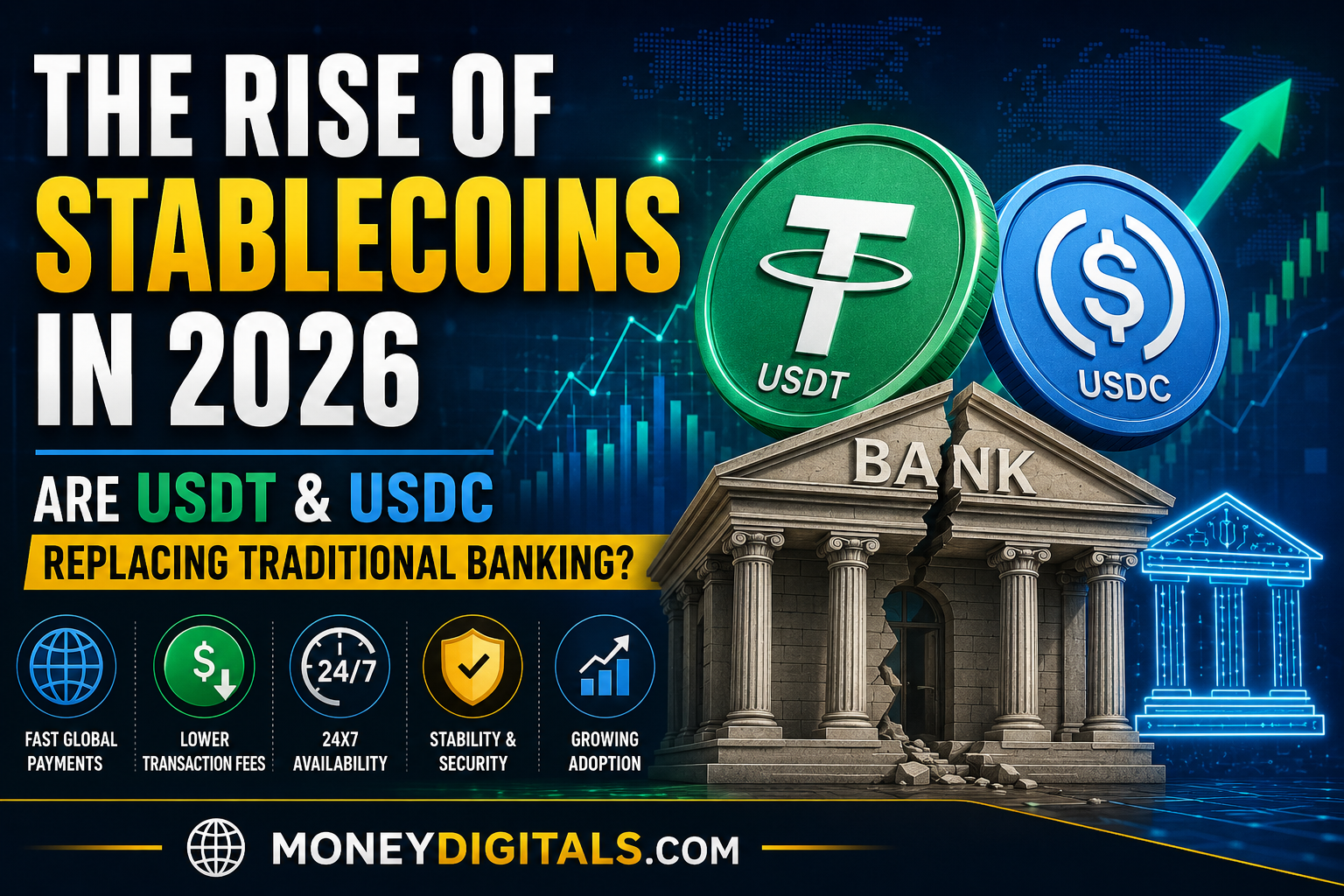
Stablecoins have become one of the most important innovations in the cryptocurrency industry. While Bitcoin and Ethereum remain highly volatile, stablecoins offer a digital asset whose value is linked to stable assets such as the US Dollar. In 2026, governments, financial institutions, fintech companies, and investors are increasingly adopting stablecoins for payments, savings, cross-border transactions, and decentralized finance (DeFi).
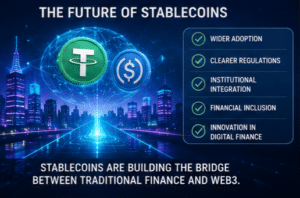
The growing popularity of USDT (Tether), USDC (USD Coin), and other regulated stablecoins has sparked an important question: Can stablecoins eventually replace traditional banking services? Although banks continue to dominate global finance, stablecoins are changing how money moves around the world by providing faster settlements, lower transaction costs, and 24/7 accessibility.
In this comprehensive guide, we’ll explore how stablecoins work, why they are gaining worldwide adoption in 2026, their advantages, risks, regulations, and whether they truly represent the future of digital finance.
What Are Stablecoins?

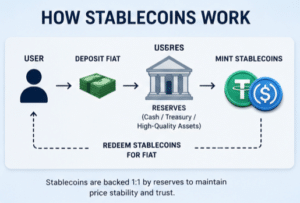
A stablecoin is a cryptocurrency designed to maintain a stable value by being pegged to another asset such as the US Dollar, Euro, Gold, or government securities. Unlike Bitcoin or Ethereum, whose prices can fluctuate dramatically, stablecoins aim to remain relatively constant, making them more practical for daily transactions and financial applications.
Stablecoins combine the speed and transparency of blockchain technology with the price stability of traditional currencies. This unique combination makes them attractive for both retail users and institutional investors.
Types of Stablecoins
| Type | Description | Examples |
|---|---|---|
| Fiat-Backed | Supported by cash or government securities. | USDT, USDC |
| Crypto-Backed | Collateralized using cryptocurrencies. | DAI |
| Commodity-Backed | Backed by physical assets such as gold. | PAX Gold |
| Algorithmic | Uses algorithms to maintain price stability. | Various experimental projects |
Why Stablecoins Are Becoming Popular in 2026
- Instant international money transfers
- Lower transaction fees compared to banks
- 24×7 global accessibility
- Growing institutional adoption
- Increasing regulatory clarity
- Integration with payment platforms
- Growing use in DeFi applications
- Protection against cryptocurrency volatility
USDT vs USDC: Key Comparison
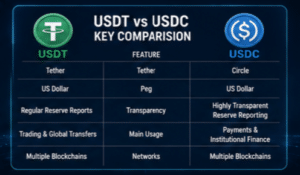
| Feature | USDT | USDC |
|---|---|---|
| Issuer | Tether | Circle |
| Peg | US Dollar | US Dollar |
| Main Usage | Trading & Global Transfers | Payments & Institutional Finance |
| Transparency | Regular Reserve Reports | Highly Transparent Reserve Reporting |
How Stablecoins Are Transforming Global Finance

Stablecoins are no longer limited to cryptocurrency trading. Businesses are using them for cross-border payments, freelancers receive international payments instantly, fintech companies integrate them into payment systems, and decentralized finance platforms use them as the foundation of lending and borrowing services.
Several governments are also studying blockchain-based payment infrastructure, making stablecoins an important bridge between traditional finance and digital assets.
Benefits of Stablecoins
- Fast international transactions
- Lower transfer costs
- Reduced settlement time
- Easy portfolio diversification
- Suitable for digital payments
- Accessible worldwide
- High liquidity
- Growing institutional acceptance
Risks of Stablecoins
Although stablecoins offer speed, convenience, and lower transaction costs, they are not completely risk-free. Investors and users should understand the potential risks before using stablecoins for payments, trading, or long-term savings.
- Regulatory changes in different countries
- Counterparty and issuer risk
- Reserve transparency concerns
- Smart contract vulnerabilities
- Cybersecurity threats and wallet hacks
- Temporary de-pegging during market stress
- Dependence on blockchain network performance
How Governments Are Regulating Stablecoins in 2026
Stablecoins have become an important part of the global financial ecosystem. As adoption increases, governments and financial regulators are introducing clearer frameworks to improve transparency, consumer protection, and reserve management. Many jurisdictions now require stablecoin issuers to maintain high-quality reserve assets, publish regular disclosures, and comply with anti-money laundering (AML) regulations.
These developments are helping increase confidence among institutional investors and businesses while reducing uncertainty in the digital asset market.
Stablecoins vs Traditional Banking
| Feature | Stablecoins | Traditional Banks |
|---|---|---|
| Availability | 24×7 | Business Hours |
| International Transfers | Usually Minutes | Often 1–5 Business Days |
| Transaction Cost | Generally Lower | May Be Higher |
| Accessibility | Global Internet Access | Bank Account Required |
| Transparency | Blockchain Records | Private Banking Systems |
Real-World Uses of Stablecoins
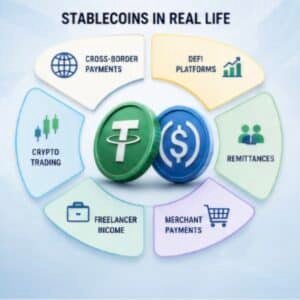
- Cross-border business payments
- International freelance income
- Merchant payment settlements
- Decentralized Finance (DeFi)
- Crypto trading liquidity
- Remittances
- Payroll payments
- Digital commerce
Can Stablecoins Replace Banks?
Stablecoins are improving payment efficiency, but they are unlikely to replace traditional banks entirely in the near future. Banks continue to provide essential services such as lending, mortgages, regulated savings accounts, and financial advisory services.
Instead, many experts expect stablecoins and traditional banks to coexist. Financial institutions are increasingly exploring blockchain-based settlement systems and digital asset infrastructure, while stablecoins continue expanding their role in payments and financial innovation.
Future Outlook for Stablecoins
The future of stablecoins appears promising as blockchain technology becomes more integrated into global finance. Greater regulatory clarity, stronger reserve standards, and wider institutional adoption could make stablecoins an increasingly important part of international payments and digital commerce over the coming years.
However, their long-term success will depend on responsible regulation, transparent reserve management, cybersecurity, and continued public trust.
Tips Before Investing or Using Stablecoins
- Use reputable wallets and exchanges.
- Research the issuer and reserve disclosures.
- Enable two-factor authentication (2FA).
- Diversify instead of relying on a single stablecoin.
- Stay informed about regulatory developments.
- Never share your wallet recovery phrase.
- Understand transaction fees before sending funds.
Frequently Asked Questions (FAQs)
1. What is a stablecoin?
A stablecoin is a cryptocurrency whose value is designed to remain stable by being linked to an asset such as the US Dollar or other reserve assets. It combines blockchain technology with price stability.
2. Which stablecoins are the most popular in 2026?
Some of the most widely used stablecoins include USDT (Tether), USDC (USD Coin), DAI, and other regulated digital dollar tokens available across multiple blockchain networks.
3. Are stablecoins safe?
Stablecoins can reduce price volatility compared to many cryptocurrencies, but they still involve risks such as regulatory changes, cybersecurity threats, reserve management, and issuer-related risks. Users should always conduct their own research before using any digital asset.
4. Can stablecoins replace traditional banks?
Stablecoins are transforming digital payments and cross-border transactions, but they are not expected to completely replace banks. Instead, many experts believe both systems will continue to evolve together.
5. Why are stablecoins becoming more popular?
Their popularity is driven by faster international transfers, lower transaction costs, 24/7 availability, growing institutional adoption, and increasing integration with financial technology platforms.
6. Should beginners invest in stablecoins?
Stablecoins are generally used for payments, liquidity management, and reducing volatility rather than seeking high investment returns. Beginners should understand the risks and consult reliable financial resources before making investment decisions.
Final Thoughts
Stablecoins have emerged as one of the most significant innovations in digital finance. By combining blockchain technology with price stability, they offer practical solutions for payments, international transfers, decentralized finance, and financial inclusion. While they are unlikely to replace traditional banking completely, they are expected to play an increasingly important role in the future of global finance.
As regulations become clearer and adoption continues to grow, stablecoins may become a core component of modern payment infrastructure. Whether you are an investor, business owner, freelancer, or someone interested in financial technology, understanding stablecoins is becoming increasingly important in 2026 and beyond.
Related Articles
- Will Oil Prices Fall in July 2026? Latest Brent Crude Analysis
- How AI Is Changing Investing in 2026
- Best Long-Term Investment Opportunities in 2026
- Stock Market Guide for Beginners
Sources
- International Monetary Fund (IMF)
- Bank for International Settlements (BIS)
- Federal Reserve
- Circle (USDC)
- Tether (USDT)

Faiz Malik is the founder of Moneydigitals, where he simplifies stock market, crypto, and global investing for beginners. His mission is to help people build wealth smartly with practical insights and real-world strategies.