

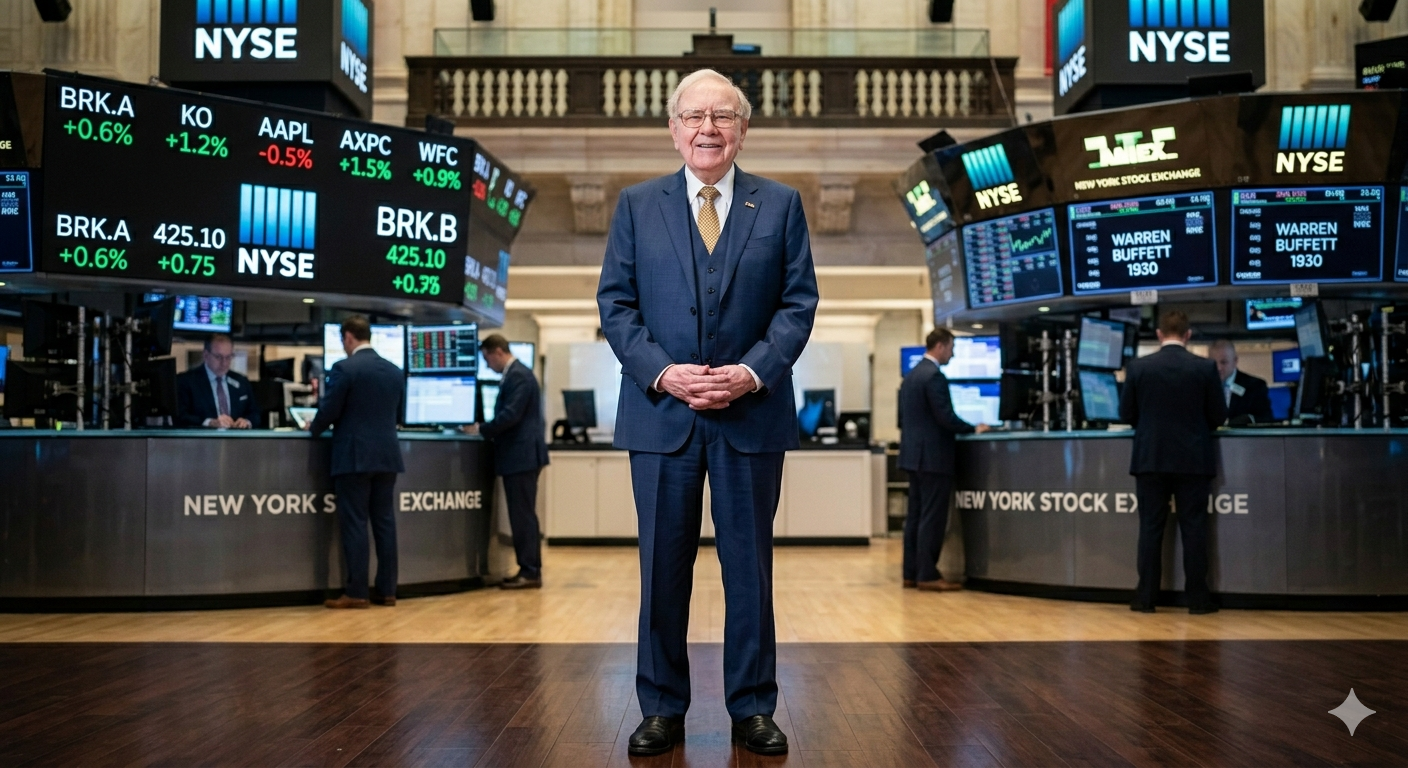


Inside the Mind of Whales: How Large Companies and Institutions Trade in 2026
Have you ever noticed that a stock suddenly jumps 5% for no apparent reason? Or a stock starts falling even when the news is good? This doesn’t happen by accident. You are watching the footprints of the “Big Sharks”—the institutional investors like Berkshire Hathaway, BlackRock, or Vanguard.
At Moneydigitals.com, we believe that if you want to win at the stock market, you must stop thinking like a retail trader and start observing how the big money moves. Today, we are pulling back the curtain on the secret strategies of billion-dollar companies.
1. The Myth of the “Big Buy”
The biggest mistake beginners make is thinking that a company like Apple or a fund like Berkshire Hathaway buys 10 million shares in one click. They can’t. If they did, the price would jump so fast that they would end up buying at a very high price.
The Strategy: Accumulation. Big companies use algorithms to break their massive orders into thousands of tiny pieces over weeks or even months. They buy slowly so that the retail public doesn’t notice until it’s too late. This is called the “Accumulation Zone.”
2. Value Investing: The Warren Buffett Model
When a large company invests, they aren’t looking at a chart for 10 minutes. They are looking at the next 10 years. Their strategy usually follows three pillars:
- Economic Moat: Does the company have a “castle” that is hard to attack? (e.g., Coca-Cola’s brand or Google’s search engine).
- Cash Flow: They don’t care about “hype.” They care about how much real cash the business is generating every month.
- Margin of Safety: They only buy when the stock is “on sale.” If a stock is worth $100, they wait until market panic brings it down to $70.
3. How They “Exit” (The Distribution Phase)
Just as they buy slowly, they sell slowly. But here is the trick: Large institutions often sell when the news is most positive. Why? Because that’s when retail traders (like us) are excited and ready to buy. While the public is buying the “hype,” the big companies are quietly handing over their shares and exiting with massive profits. This is known as the “Distribution Phase.”
4. Hedging: Protecting the Empire
Unlike retail traders who often go “All-In,” big companies never leave their positions unprotected. They use Hedging. For every $1 billion they invest in stocks, they might spend a small percentage on “Put Options” or Gold. This acts as an insurance policy. If the market crashes, their insurance pays out, covering their stock losses.
5. Algorithmic and High-Frequency Trading (HFT)
In 2026, the big players don’t just rely on human traders. They use AI and Supercomputers. These machines can read a news headline, analyze its impact on the economy, and execute a trade in milliseconds—faster than you can blink. This is why we often see sudden, sharp movements in stock prices during earnings calls.
6. How Can You Use This Information?
You cannot fight the big sharks, so you must swim with them. Here is how:
- Follow the Volume: Huge spikes in volume usually mean a big company has entered the room. Pay attention.
- Don’t Chase Hype: If everyone on the news is talking about a stock, the big players are likely already preparing to sell.
- Be Patient: Big companies don’t panic. They know that quality takes time to grow.
Final Thoughts: Think Like a CEO, Not a Gambler
The stock market is essentially a transfer of money from the impatient to the patient. Big companies win because they have a plan, a system, and the patience to wait for the right opportunity. At Moneydigitals.com, we want you to develop that same “Institutional Mindset.”
In our next article, we will go even deeper into “How to Read a Company’s Balance Sheet” so you can spot these opportunities yourself!
High-Risk Investment Warning
“Trading and investing in the stock market, cryptocurrencies, and global commodities involve significant financial risk. Market volatility can be extreme, especially during periods of geopolitical instability. You may lose some or all of your initial investment. Therefore, you should only invest money that you can afford to lose. We strongly recommend consulting with a certified financial professional or a licensed investment advisor before making any capital allocations.”

Faiz Malik is the founder of Moneydigitals, where he simplifies stock market, crypto, and global investing for beginners. His mission is to help people build wealth smartly with practical insights and real-world strategies.