
- 0
- 1,860 word
How Stablecoins Are Changing the Future of Payments: Transforming Global Finance in 2026
The global payment industry is experiencing a major transformation as digital technology changes how individuals and businesses send, receive, and manage money. One of the most important developments in this financial revolution is the growing use of stablecoins.
Stablecoins are digital currencies designed to maintain a relatively stable value by being linked to traditional assets such as the US dollar. Unlike Bitcoin and many other cryptocurrencies, which can experience significant price fluctuations, stablecoins aim to provide a more predictable value for everyday financial transactions.
In 2026, stablecoins are attracting attention from financial institutions, technology companies, investors, and governments because of their potential to make payments faster, more accessible, and more efficient.
From international money transfers and online shopping to business payments and digital banking, stablecoins could change how money moves around the world.
But how exactly are stablecoins transforming the payment industry? What benefits do they offer, and what challenges could limit their adoption?
This article explores how stablecoins are changing the future of payments and their potential impact on the global financial system.
1. Understanding What Stablecoins Are
Stablecoins are digital assets designed to maintain a relatively stable value compared with another asset, usually a traditional currency such as the US dollar.
For example, a US dollar-pegged stablecoin aims to maintain a value close to $1 per token.
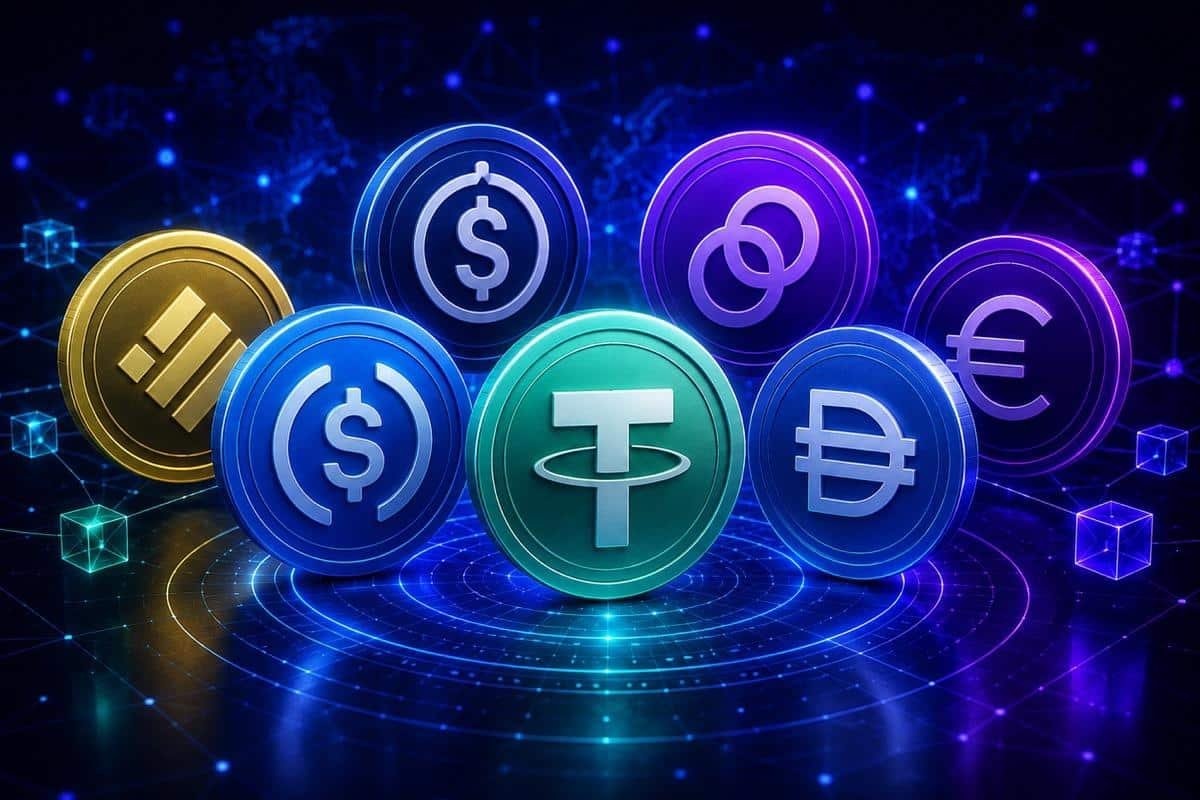
Popular examples include USD Coin (USDC) and Tether (USDT).
Unlike traditional cryptocurrencies, stablecoins are designed to reduce price volatility, making them potentially more useful for payments and transferring money.
Many fiat-backed stablecoins are supported by reserves such as cash, bank deposits, and short-term government securities. However, their reserve arrangements differ, so users should examine the issuer’s transparency and redemption policies.
Stablecoins generally operate on blockchain networks, allowing users to transfer digital tokens between compatible wallets without relying entirely on traditional banking payment infrastructure.
2. Faster and More Efficient International Payments
One of the biggest advantages of stablecoins is their potential to improve international money transfers.
Traditional cross-border payments may involve several banks, payment providers, currency conversions, and settlement processes. Depending on the countries and institutions involved, transactions can take several business days.
Stablecoins can potentially simplify this process by allowing value to move directly between compatible digital wallets using blockchain networks.
For example, a business in the United States could send dollar-denominated stablecoins to a supplier in another country without using the same traditional correspondent banking process.
Depending on the blockchain network and service providers, transactions may settle within seconds or minutes.
This could make international payments more convenient for businesses that regularly work with overseas suppliers and customers.
However, final settlement is only one part of the payment process. Converting stablecoins into local currencies and complying with financial regulations can still create delays and expenses.
3. Stablecoins Could Reduce International Transfer Costs
International money transfers can become expensive because of bank charges, payment processing fees, exchange rate differences, and intermediary costs.
Stablecoins may help reduce some of these expenses by simplifying the movement and settlement of money across borders.
For example, someone sending money to family members in another country may be able to transfer stablecoins through a digital wallet rather than relying entirely on traditional international payment services.
The International Monetary Fund (IMF) identifies potentially lower transaction costs and faster settlement as important benefits of stablecoin payments, particularly for remittances.
However, stablecoin transfers are not automatically free or cheaper. Users may still pay blockchain network fees, wallet charges, exchange fees, and local currency conversion costs.
The total cost depends on the payment route, service providers, and countries involved.
4. Stablecoins Are Changing Business Payments
Businesses operating internationally often face challenges when paying suppliers, employees, contractors, and service providers.
Traditional international payments may involve complicated banking arrangements and currency conversion expenses.
Stablecoins could provide another option for businesses that need to move money across borders.
For example, an online company in the United States could potentially use dollar-denominated stablecoins to pay an international contractor who accepts them.
Businesses may also explore stablecoins for supplier payments, international settlements, and treasury operations.
Another interesting development is programmable payments.
Because stablecoins operate on blockchain networks, developers can create smart contracts that automatically execute certain transactions when predefined conditions are satisfied.
For example, a business payment could be released when a delivery confirmation is recorded.
These applications could improve payment efficiency and reduce certain administrative processes.
However, businesses must still consider accounting, taxation, legal requirements, and payment security.
5. Stablecoins Could Improve Financial Access
Millions of people around the world have limited access to traditional banking services.
In some developing economies, opening a bank account or accessing international payment services can be difficult because of documentation requirements, high fees, limited infrastructure, or geographical barriers.
Stablecoins may provide another way for people with appropriate internet access and compatible digital wallets to store and transfer value.
Dollar-backed stablecoins may also attract people living in countries experiencing high inflation or currency depreciation.
For example, someone in an economy with an unstable local currency might be interested in holding a digital asset linked to the US dollar.
However, this does not eliminate financial risks. Users must understand local laws, wallet security, currency restrictions, and the possibility that a stablecoin could lose its intended peg.
Financial inclusion also requires access to reliable internet, suitable devices, financial education, and regulated services.
6. Stablecoins Are Creating New Opportunities for Digital Commerce
Online businesses are increasingly exploring alternative payment methods to improve customer convenience and international transactions.
Stablecoins could allow online merchants to accept digital payments from customers in different countries without depending entirely on conventional card networks.
For example, a digital business selling software subscriptions or online services could potentially accept stablecoins from customers who prefer blockchain-based payments.
This may be particularly useful for companies operating internationally.
Stablecoins may also support automated payments between digital services and connected software applications.
As artificial intelligence and automated business systems become more sophisticated, programmable digital money could create additional opportunities for machine-to-machine payments.
However, stablecoin payments still need appropriate fraud protection, customer verification, refund procedures, and consumer safeguards.
7. Stablecoins Are Attracting Banks and Financial Institutions
Traditional financial institutions are paying increasing attention to stablecoins because of their potential to change payment infrastructure.
Banks, payment companies, and financial technology businesses are exploring blockchain-based settlement systems and digital payment services.
The potential benefits include faster international transfers, improved transaction visibility, and more efficient financial operations.
In the United States, the GENIUS Act was signed into law on July 18, 2025, establishing a federal framework for payment stablecoins.
In October 2026, the Office of the Comptroller of the Currency issued a final rule implementing aspects of this framework, with an effective date of January 18, 2027.
This demonstrates how stablecoin regulation is becoming an important part of the financial industry’s development.
The Federal Reserve has also continued developing regulatory proposals covering payment stablecoin issuers and related activities.
These developments could influence how banks and other financial institutions participate in the stablecoin market.
8. Challenges and Risks of Stablecoin Payments
Although stablecoins offer several potential benefits, they also introduce important risks.
Depegging risk: A stablecoin may lose its intended value if investors lose confidence in its reserves or redemption arrangements.
Regulatory uncertainty: Countries have different rules governing digital assets, stablecoin issuers, taxation, and financial services.
Cybersecurity: Digital wallets and blockchain platforms can be exposed to hacking, phishing, and software vulnerabilities.
Reserve transparency: Users need confidence that issuers hold appropriate assets to support redemption requests.
Limited interoperability: Different blockchain networks may not communicate easily with one another, creating additional payment difficulties.
Currency substitution: Widespread use of foreign currency-backed stablecoins may weaken demand for local currencies in some economies, creating challenges for monetary policy.
The IMF has highlighted these risks while recognising the potential benefits of stablecoins for international payments.
9. What Is the Future of Stablecoins in the Global Payment Industry?
Stablecoins could become an increasingly important part of international payment infrastructure over the coming years.
Businesses may use them for supplier payments, international settlements, and digital commerce. Individuals may explore them for remittances and cross-border transfers.
Financial institutions may also develop new services that combine traditional banking with blockchain-based payment systems.
However, stablecoins are unlikely to replace every traditional payment method.
Banks, card networks, central bank payment systems, and other financial institutions will continue to play important roles in the global economy.
The future will likely involve different payment technologies operating alongside one another.
The success of stablecoins will depend on their reliability, regulatory compliance, security, redemption arrangements, interoperability, and ability to provide genuine benefits to users.
Conclusion
Stablecoins are changing the future of payments by introducing new ways to transfer digital money across borders and between businesses and individuals.
Their potential advantages include faster settlement, lower transaction costs in certain payment corridors, greater accessibility, and programmable financial transactions.
However, they also introduce challenges involving security, regulation, reserve transparency, and financial stability.
For businesses and consumers, stablecoins could provide additional payment options as the global financial system becomes increasingly digital.
Ultimately, stablecoins are not simply another development in cryptocurrency. They represent an evolving approach to digital payments that could influence how international finance operates in the future.
Disclaimer: This article is for educational and informational purposes only and does not constitute financial or investment advice. Stablecoins involve risks, including loss of value, issuer failure, cybersecurity threats, and regulatory uncertainty. Always research the issuer, reserve arrangements, and applicable regulations before using digital assets.
Frequently Asked Questions
1. What are stablecoins used for?
Stablecoins are used for digital payments, cryptocurrency trading, international transfers, business settlements, and storing value in digital form.
2. Are stablecoins better than traditional bank transfers?
Stablecoins may offer faster settlement and lower costs in certain situations. However, traditional bank transfers provide established consumer protections and financial infrastructure. The better option depends on the transaction.
3. Are stablecoins safe to use?
Some stablecoins have reserve arrangements and redemption mechanisms designed to maintain their value, but they are not risk-free. Users should examine issuer credibility, reserves, wallet security, and applicable regulations.
4. What are the most popular stablecoins?
USDT (Tether) and USDC (USD Coin) are among the most widely used dollar-pegged stablecoins.
5. Can stablecoins replace traditional banking?
Stablecoins may complement existing financial systems by improving certain payment and settlement processes. However, they do not provide all the services offered by traditional banks, such as lending, deposit-taking, and broader financial intermediation.
6. How do stablecoins benefit international businesses?
They may help businesses transfer funds across borders, settle international payments, and reduce certain payment processing costs, depending on network fees, currency conversion, and regulatory requirements.

Faiz Malik is the founder of Moneydigitals, where he simplifies stock market, crypto, and global investing for beginners. His mission is to help people build wealth smartly with practical insights and real-world strategies.
Author
moneydigitals1234@gmail.com
Related Posts

Smart Money Management Strategies for Young Investors
- 0
- 1,752 word
Smart Money Management Strategies for Young Investors: How to Build Wealth and Secure Your Financial Future Managing money wisely is one of...
Read out all
What is the 3 6 9 rule for emergency fund?
- 0
- 1,828 word
What Is the 3-6-9 Rule for an Emergency Fund? How Much Money Should You Save? Building an emergency fund is one of...
Read out all
Is a digital bank better than a traditional bank?
- 0
- 1,765 word
Is a Digital Bank Better Than a Traditional Bank? Understanding the Differences in 2026 Banking has changed significantly over the last decade....
Read out all
What is the $27.40 rule?
- 0
- 1,570 word
What Is the $27.40 Rule? How to Save $10,000 in One Year Saving money is one of the most important habits for...
Read out all
Top Emerging Industries for Entrepreneurs in 2026
- 0
- 1,783 word
How Geopolitical Tensions Affect Global Oil Prices: Understanding the Impact of Wars, Conflicts, and Political Uncertainty Oil is one of the most...
Read out allHow Geopolitical Tensions Affect Global Oil Prices
- 0
- 1,783 word
How Geopolitical Tensions Affect Global Oil Prices: Understanding the Impact of Wars, Conflicts, and Political Uncertainty Oil is one of the most...
Read out all