
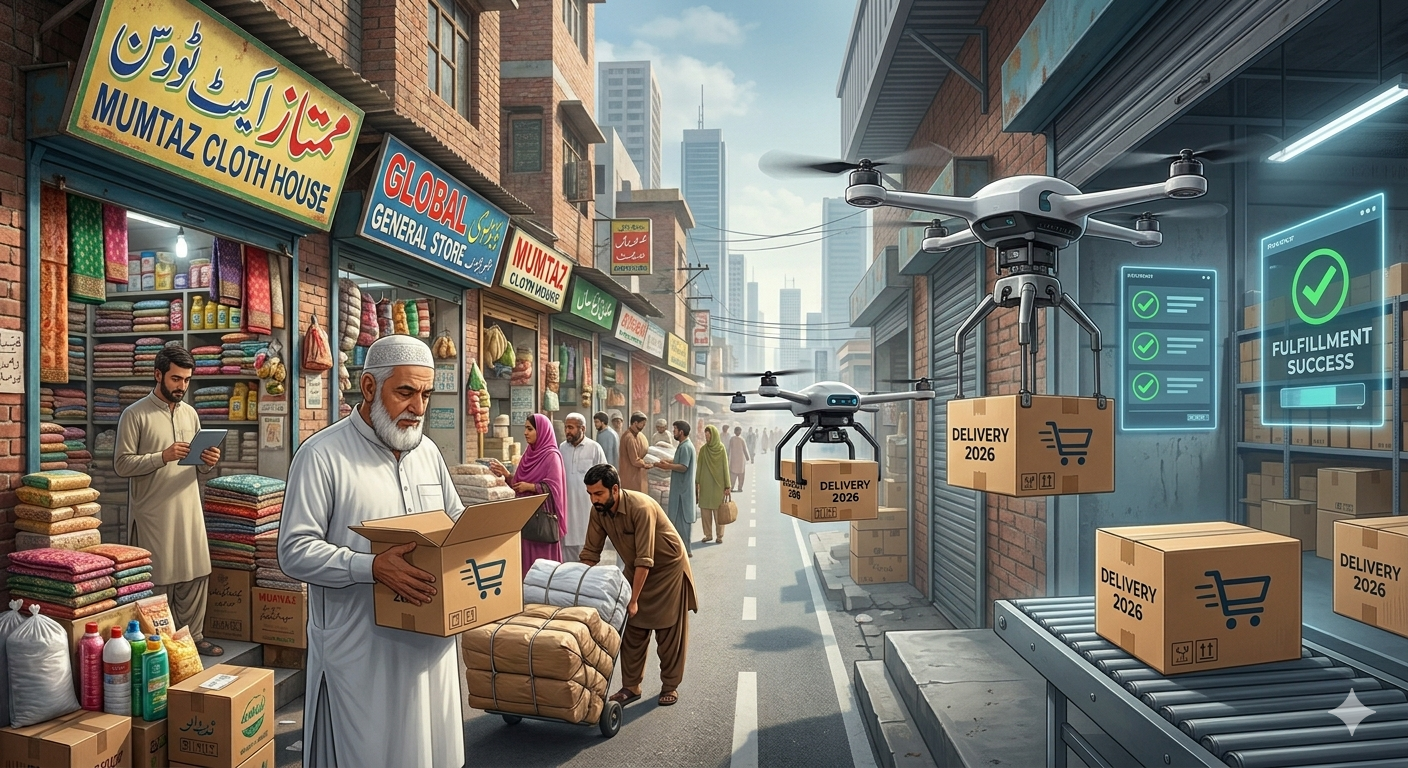
In the year 2026, the debate between Online vs Offline Business 2026 has reached a tipping point. Let’s be real for a second—walking through a traditional wholesale market in 2026 feels very different than it did five years ago. There’s a certain tension in the air. You see shopkeepers staring at their phones, not just for entertainment, but watching price wars happen in real-time on e-commerce apps.
The rise of online business hasn’t just “changed” the market; it has completely dismantled the old way of doing things. From the local neighborhood shop to the massive warehouses of wholesalers, everyone is feeling the heat. But is it all bad news? Not exactly. Let’s dive into who is struggling, who is winning, and how the landscape has shifted.
The Death of the “Middleman” Myth
For decades, the wholesaler was the king of the supply chain. If a shopkeeper wanted stock, they had to travel to the big city, meet the wholesaler, and negotiate.
In 2026, that “Middleman” model is under heavy fire. Many manufacturers are now using a Direct-to-Consumer (DTC) approach. They are skipping the wholesaler and selling straight to the customer via Instagram, TikTok, or their own websites.
- The Impact: Wholesalers who refused to digitize are seeing their godowns gather dust.
- The Pivot: On the flip side, smart wholesalers have turned into “fulfillment centers.” They now supply the very online sellers that were once their enemies. They realized that if you can’t beat the internet, you should become its backbone.
The Struggle of the Local Shopkeeper
The hardest hit? The small retailers. In 2026, “Convenience” is the ultimate currency. Why would someone drive through traffic to buy a toaster when they can get it delivered in 30 minutes via a “Quick-Commerce” app?
Small shopkeepers are facing a double-edged sword: Price and Variety. They can’t keep 50 versions of a product in a 10×10 shop, but a website can. However, we are seeing a “Human Touch” comeback. People are tired of talking to AI bots. Shopkeepers who know their customers by name and offer instant repairs or personalized advice are actually surviving—and even thriving.
The Surprise Winners: The Support Industry
While we talk about the war between online and offline, we often forget the people making a killing behind the scenes. 2026 has been the golden year for:
- The Logistics Army: Every online order needs a rider. The delivery industry is now one of the biggest employers globally.
- Packaging Kings: Think about it—every single order needs a cardboard box, bubble wrap, and tape. The packaging industry has seen a 300% growth because of the e-commerce surge.
- Digital Fixers: From social media managers to local SEO experts, a new breed of “market workers” has emerged to help offline shops go digital.
Why Offline Won’t Fully Die (The 2026 Reality)
Surprisingly, 2026 is seeing a “Physical Store” revival, but with a twist. We call it “Phygital.” People still want to touch the fabric of a suit or hear the bass of a speaker before buying. Major online brands are now opening physical “Experience Centers.” They don’t want you to buy it there; they want you to feel it there and then order it on the app. The market is no longer a place to just “buy stuff”—it’s a place to experience a brand.
Final Thoughts: Adapt or Evaporate
The 2026 market doesn’t hate offline business; it hates stagnation. If you are a shopkeeper waiting for the “good old days” to return, you might be waiting forever.
The winners today are those who use their physical shop as a showroom and their social media as a storefront. The internet hasn’t killed the market; it has simply invited everyone to a much bigger, much faster game.

Faiz Malik is the founder of Moneydigitals, where he simplifies stock market, crypto, and global investing for beginners. His mission is to help people build wealth smartly with practical insights and real-world strategies.