
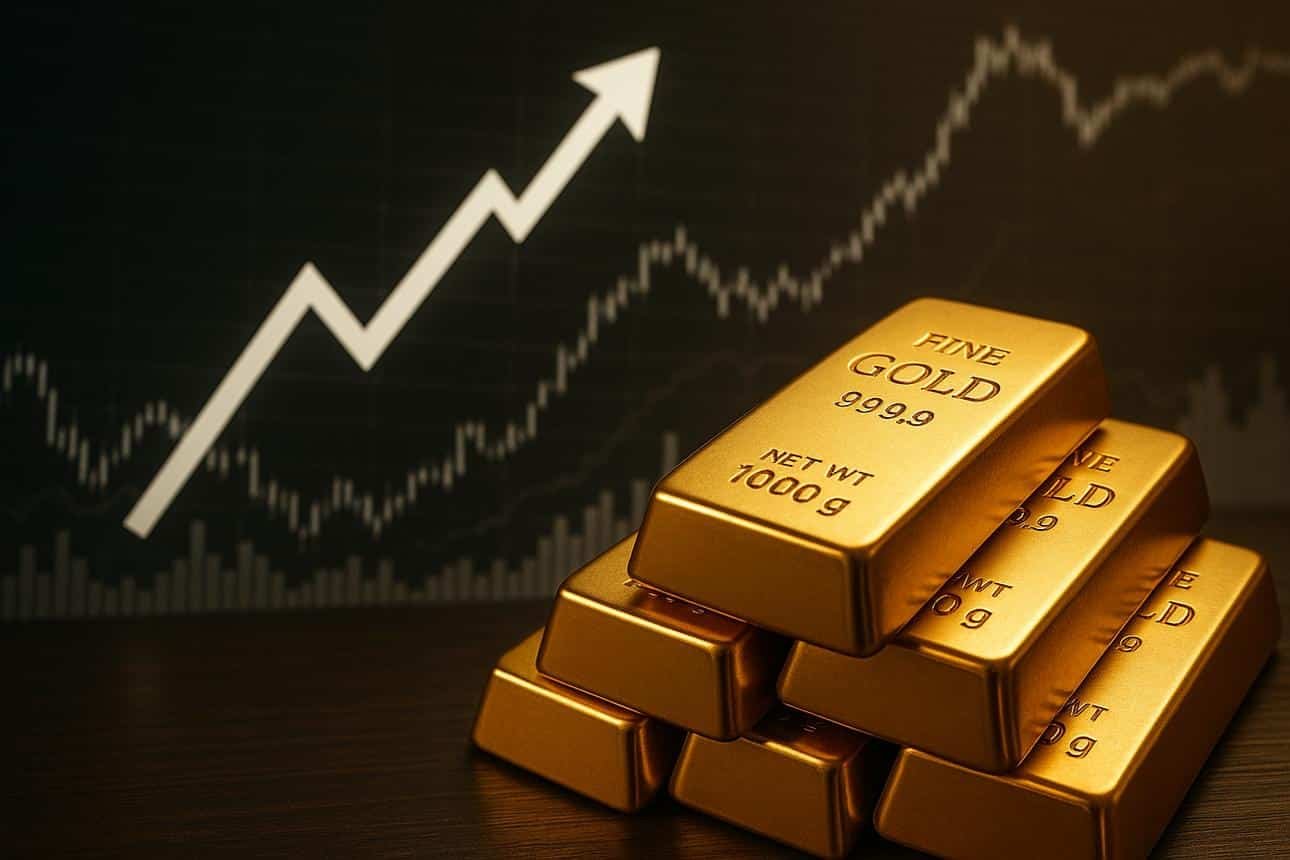
Why Is the Gold Price Increasing Suddenly in 2026? 7 Major Reasons Behind the Gold Price Surge
Gold has always been considered an important investment asset, particularly during periods of economic uncertainty. However, gold prices can sometimes increase dramatically within a short period, attracting attention from investors, traders, central banks, and financial institutions.
In November 2026, gold prices have experienced a strong recovery after a significant decline in October. On November 5, spot gold climbed above $4,100 per ounce, reaching approximately $4,146.63 during the trading session. This followed a nearly 3.4% increase on November 4, marking its strongest daily gain since August 19.
But why is the price of gold increasing suddenly? Is it because investors are worried about the global economy, is the US dollar becoming weaker, or are interest rate expectations changing?
Several economic and financial developments are contributing to the recent movement. Understanding these factors can help investors make better decisions about gold and other financial assets.
1. A Weaker US Dollar Is Supporting Gold Prices
One of the biggest reasons gold prices are increasing is the weakening US dollar.
Gold is internationally priced in US dollars. When the dollar loses value against other currencies, gold becomes relatively cheaper for investors purchasing it with different currencies.
This can increase international demand and put upward pressure on gold prices.
For example, when the US dollar becomes weaker against the euro, pound, or other major currencies, investors using those currencies may find gold more affordable.
During November 5, 2026, the US dollar fell to its lowest level in more than a month, helping support demand for gold.
This relationship between gold and the dollar is one of the most important factors investors monitor when analysing precious metal prices.
However, the relationship is not automatic. Gold can sometimes increase even when the dollar strengthens, depending on other economic developments.
2. Falling US Treasury Yields Are Increasing Gold’s Appeal
Another important reason behind the recent gold rally is the decline in US Treasury yields.
Gold does not generate interest payments or dividends. Therefore, investors often compare the potential benefits of holding gold with the returns available from interest-paying investments such as government bonds.
When Treasury yields decline, the opportunity cost of holding gold becomes relatively lower.
This can encourage investors to purchase more gold, particularly when they expect interest rates to fall in the future.
On November 5, 2026, Reuters reported that the benchmark US 10-year Treasury yield had declined to its lowest level since September 10.
The decline helped support gold prices and contributed to the recovery above $4,000 per ounce.
However, investors should also watch real interest rates, which measure bond yields after accounting for inflation expectations.
Lower real yields can make gold more attractive, while rising real yields can create pressure on its price.
3. US Midterm Election Results Are Influencing Investor Confidence
Political developments can have a significant impact on financial markets.
The US midterm elections held on November 3, 2026, influenced expectations about economic policy, government spending, international relations, and future financial market conditions.
Following significant Democratic gains, the US dollar and Treasury yields weakened, helping support gold prices.
Investors also considered the possibility that changes in political conditions could improve prospects for negotiations between the United States and Iran.
These developments contributed to the recent movement in gold.
However, political events do not always cause gold prices to rise. Sometimes an election result reduces uncertainty and encourages investors to move money into riskier assets.
What matters is how political developments influence interest rates, currencies, inflation expectations, and investor confidence.
4. Lower Oil Prices Are Reducing Inflation Concerns
Oil prices are another important factor influencing the gold market.
Energy prices affect transportation, manufacturing, electricity production, and the overall cost of living.
When oil prices increase significantly, inflation concerns can become stronger, potentially influencing central bank interest rate decisions.
During November 4 and 5, 2026, crude oil prices declined sharply following hopes of reduced tensions involving Iran.
Brent crude fell nearly 9% during the previous session, helping reduce concerns about energy-related inflation.
This development influenced expectations about monetary policy and contributed to the decline in Treasury yields.
Lower oil prices can therefore support gold indirectly when they reduce inflation concerns and pressure on interest rate expectations.
Nevertheless, oil prices and gold do not always move in the same direction. Their relationship depends on the wider economic environment.
5. Geopolitical Uncertainty Is Supporting Demand for Gold
Gold is traditionally regarded as a safe-haven asset because investors often purchase it during periods of financial and geopolitical uncertainty.
Wars, international conflicts, trade tensions, and political disagreements can create uncertainty about the future of the global economy.
During such periods, some investors reduce exposure to risky assets and increase holdings of gold.
The recent situation involving the United States, Israel, and Iran has attracted significant attention from financial markets.
Expectations surrounding possible diplomatic developments have influenced oil prices, currencies, and investor sentiment.
Even when tensions appear to ease, uncertainty about the success of negotiations can continue affecting precious metal demand.
Gold can therefore remain attractive to investors seeking diversification during uncertain international conditions.
However, gold is not guaranteed to increase whenever geopolitical tensions rise.
6. Investors Are Returning to Gold After Its Recent Price Decline
Another important factor behind the sudden increase is that gold had previously experienced a substantial correction.
Before the recent recovery, spot gold declined to approximately $3,869.85 per ounce on October 30, 2026, reaching a one-year low.
Following this decline, gold began recovering as investor sentiment improved.
Some investors may have viewed the lower prices as an opportunity to purchase gold at more attractive levels.
Technical trading indicators, short-term investor positioning, and changes in market sentiment may also have contributed to the rebound.
Reuters reported that gold had gained more than $250 from its October 30 low by November 5.
This shows how quickly commodity prices can change when investors adjust their expectations.
However, a strong price recovery does not necessarily mean that gold has entered a new sustained upward trend.
7. Central Bank Gold Purchases Are Supporting Long-Term Demand
Central banks are important participants in the global gold market.
Many countries maintain gold reserves as part of their foreign exchange reserves and long-term financial strategies.
Gold provides central banks with an asset that does not depend directly on the financial performance or creditworthiness of another government.
Countries may purchase additional gold to diversify their reserves, manage currency exposure, and strengthen confidence in their financial systems.
Central bank demand can provide longer-term support for gold prices, although it does not explain every short-term price movement.
The World Gold Council identifies central bank activity, investment demand, geopolitical uncertainty, currency movements, and interest rates as important factors affecting the gold market.
These developments help explain why gold remains an important asset for international investors and financial institutions.
Will Gold Prices Continue Increasing?
Although gold has recently experienced a strong recovery, its future direction remains uncertain.
Several factors could support higher prices:
- Continued weakness in the US dollar.
- Further declines in Treasury yields.
- Strong central bank purchases.
- Increased demand for gold-backed ETFs.
- Persistent geopolitical uncertainty.
However, some developments could place pressure on gold prices.
A stronger US dollar, rising real interest rates, reduced investment demand, and profit-taking could cause gold to decline.
Investors should also pay attention to US employment and inflation reports because these economic indicators can influence Federal Reserve monetary policy.
On November 5, Reuters reported that investors were watching the upcoming US non-farm payrolls report scheduled for November 6 for further clues about the Federal Reserve’s interest rate outlook.
If employment data is stronger than expected, expectations of tighter monetary policy could create pressure on gold.
Therefore, investors should avoid assuming that the recent rally will continue indefinitely.
Conclusion: Why Is Gold Increasing Suddenly in 2026?
The recent increase in gold prices is being driven by several connected developments, particularly a weaker US dollar, falling Treasury yields, changing political expectations, lower oil prices, and renewed investor demand.
Gold’s recovery above $4,000 per ounce demonstrates how quickly financial markets can respond when economic expectations change.
For investors, understanding these factors is more useful than simply following daily gold price movements.
Gold can play an important role in portfolio diversification, but purchasing it at a high price also involves risks.
Before investing, examine interest rate expectations, currency movements, geopolitical developments, and the overall financial environment.
Ultimately, gold prices are influenced by a combination of economic conditions, investor behaviour, central bank activity, and global demand.
Disclaimer: This article is for educational and informational purposes only and does not constitute financial or investment advice. Gold prices can fluctuate significantly, and investors may lose money. Always conduct independent research or consult a qualified financial adviser before investing.
Frequently Asked Questions
1. Why is gold price increasing suddenly in 2026?
Gold prices have recently increased because of a weaker US dollar, declining Treasury yields, changing political expectations following the US midterm elections, and renewed investor demand.
2. Will gold prices continue rising in 2026?
Gold may continue rising if demand remains strong and the dollar and real interest rates weaken. However, higher yields, a stronger dollar, or profit-taking could cause prices to decline.
3. Does a weak US dollar increase gold prices?
Generally, yes. A weaker dollar makes gold relatively cheaper for international buyers, potentially increasing demand.
4. How do interest rates affect gold prices?
Lower interest rates can make gold more attractive because it does not pay interest. Higher interest rates can make interest-bearing investments more competitive.
5. Is gold a good investment in 2026?
Gold may be useful for diversification and long-term wealth preservation, but its price can fluctuate considerably. Investors should consider their financial goals and risk tolerance.
6. Should I buy gold when prices are increasing?
Investors should avoid purchasing gold simply because prices are rising. Consider current valuations, your investment horizon, diversification, and the possibility of a price correction before investing.
7. Why do central banks buy gold?
Central banks purchase gold to diversify their foreign exchange reserves, manage financial risks, and hold an internationally recognised reserve asset.

Faiz Malik is the founder of Moneydigitals, where he simplifies stock market, crypto, and global investing for beginners. His mission is to help people build wealth smartly with practical insights and real-world strategies.