
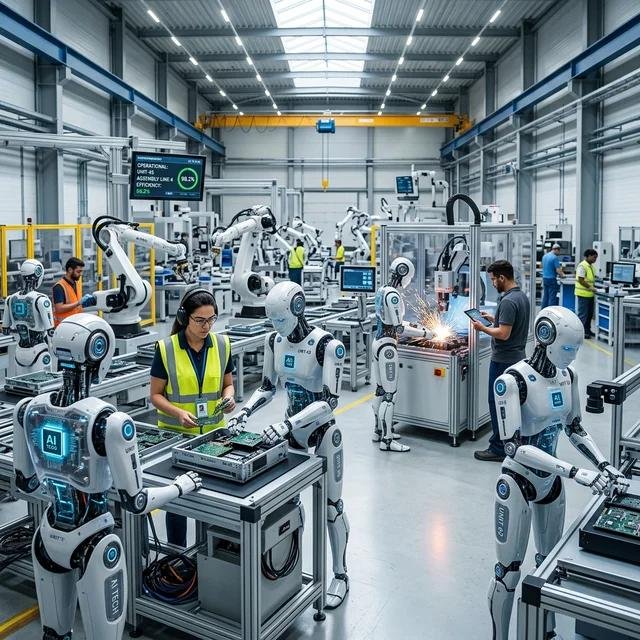
What Is the Future of Automation and Robotics? How Intelligent Machines Will Transform the World
Automation and robotics are becoming some of the most important technologies shaping the future of the global economy. From manufacturing factories and warehouses to hospitals, agriculture, and transportation, intelligent machines are changing how businesses operate and how people perform everyday tasks.
For many years, robots were mainly used to perform repetitive activities in industrial environments. However, advances in artificial intelligence (AI), machine learning, computer vision, and sensor technology are making modern robots more intelligent, flexible, and independent.
In 2026, businesses are increasingly exploring automation to improve productivity, reduce operational costs, address labour shortages, and increase efficiency.
But what does the future of automation and robotics look like? Will robots replace human workers? Which industries will benefit most from these technologies?
This article explores the major developments shaping the future of automation and robotics and their potential impact on businesses, employment, and the global economy.
1. Artificial Intelligence Will Make Robots More Intelligent
One of the biggest developments in robotics is the integration of artificial intelligence.
Traditional robots are often programmed to perform specific tasks in controlled environments. AI-powered robots can increasingly analyse information, recognise objects, understand their surroundings, and respond to changing situations.
For example, an intelligent warehouse robot can identify packages, navigate around obstacles, and transport products without requiring constant human instructions.
AI is also helping robots learn from data and improve their performance over time.
The International Federation of Robotics identifies AI and autonomous operation as major robotics trends in 2026. These developments are helping robots move beyond simple programmed activities towards more flexible and intelligent operations.
2. Humanoid Robots Could Transform the Workplace
Humanoid robots are machines designed to resemble the human body, often featuring a head, arms, legs, and hands.
Their development is attracting attention because they could eventually perform certain activities in environments designed for people.
For example, humanoid robots may assist with moving materials, organising warehouse products, carrying equipment, and performing repetitive manufacturing tasks.
Companies developing humanoid robotics are working to improve balance, movement, object recognition, and the ability to interact safely with humans.
However, widespread adoption will depend on whether these robots can become reliable, affordable, energy-efficient, and productive enough to compete with traditional automation systems.
In the coming years, manufacturing and logistics may become important testing grounds for humanoid robots.
3. Automation Will Transform Manufacturing Industries
Manufacturing is already one of the largest users of industrial robotics.
Factories use automated machines to assemble products, weld components, package goods, inspect materials, and perform repetitive production activities.
In the future, AI-powered manufacturing systems could make production lines more adaptable and efficient.
Smart factories will increasingly connect robots, sensors, computers, and manufacturing equipment into integrated systems.
These systems can monitor production performance, identify equipment problems, and adjust certain operations automatically.
According to the International Federation of Robotics, approximately five million industrial robots were operating in factories worldwide in 2025. More than 600,000 new industrial robots were installed during that year.
The IFR forecasts that industrial robot installations will increase to approximately 655,000 units in 2026, demonstrating the continuing expansion of industrial automation.
4. Healthcare Will Benefit from Advanced Robotics
Healthcare is another industry where robotics could create significant opportunities.
Robotic technologies are already used in surgical assistance, rehabilitation, medical research, and hospital logistics.
In the future, more advanced robotic systems could help medical professionals perform precise procedures, transport medical supplies, assist patients with rehabilitation, and improve hospital operations.
AI may also help robotic systems analyse medical information and support healthcare professionals in certain clinical tasks.
For example, rehabilitation robots can assist patients recovering from injuries by supporting controlled physical movements.
However, healthcare robotics will require strict safety standards, clinical testing, and professional supervision.
Robots will support medical professionals rather than remove the need for qualified doctors, nurses, and other healthcare workers.
5. Agriculture Will Become More Automated
Agriculture is facing several challenges, including labour shortages, rising production costs, changing weather conditions, and increasing demand for food.
Robotics and automation could help farmers address some of these problems.
Agricultural robots can assist with planting, harvesting, crop monitoring, irrigation, and weed control.
AI-powered agricultural machines can also analyse information from cameras and sensors to identify crop conditions and improve farming decisions.
For example, automated harvesting systems can help farmers collect certain crops while reducing the amount of manual labour required.
Drones and autonomous agricultural vehicles may also become more common as farming operations become increasingly technology-driven.
These developments could improve productivity and help farmers use resources more efficiently.
6. Self-Driving Vehicles Will Change Transportation
Automation is transforming transportation through the development of autonomous vehicles and intelligent traffic systems.
Self-driving technology combines cameras, sensors, radar, and AI software to help vehicles understand their surroundings and make driving decisions.
In the future, autonomous vehicles may become increasingly important in controlled transport environments, warehouses, industrial facilities, and selected road applications.
Robotics is also changing logistics through automated delivery systems and autonomous warehouse vehicles.
These technologies could improve transportation efficiency, reduce certain operational costs, and support logistics companies.
However, safety, regulations, infrastructure, cybersecurity, and public acceptance remain major challenges before fully autonomous transportation becomes widespread.
7. Robots Will Become More Common in Warehouses and Businesses
E-commerce and online shopping have increased demand for faster and more efficient delivery services.
As a result, logistics companies are investing in robots that can move products, organise inventory, package orders, and support warehouse operations.
Autonomous mobile robots can transport goods across warehouses while avoiding certain obstacles.
Robotic systems can also assist employees with sorting packages and managing inventory.
The International Federation of Robotics reported that professional service robot shipments increased by 24% in 2025, reaching almost 250,000 units. Transport and logistics accounted for approximately 117,000 units, making it the leading application area.
This demonstrates the growing commercial importance of robotics beyond traditional manufacturing.
8. Automation Will Change Employment and Business Skills
The expansion of automation will influence the global labour market.
Some repetitive jobs may become less common as businesses introduce machines capable of completing certain activities more efficiently.
However, automation is also creating demand for new professional skills.
Future career opportunities may include:
- Robotics engineers.
- AI and machine learning specialists.
- Automation technicians.
- Robotics maintenance professionals.
- Industrial software developers.
- Robotics safety specialists.
The World Economic Forum’s Future of Jobs Report 2025 estimates that broader economic and technological changes could create 170 million jobs and displace 92 million jobs globally by 2030.
This suggests that technological change will transform employment rather than simply eliminate work.
Workers who develop technical abilities, problem-solving skills, and digital knowledge may be better prepared for the changing employment market.
9. Robotics Will Create New Challenges for Businesses
Although automation offers many benefits, businesses must also consider its challenges.
The cost of purchasing, installing, and maintaining advanced robotic systems can be significant.
Companies may also need to invest in employee training, cybersecurity, software integration, and workplace safety.
Robots connected to business networks can create additional cybersecurity risks if their systems are not properly protected.
Furthermore, businesses must ensure that automated equipment operates safely alongside human employees.
Successful automation will therefore require more than purchasing robots. Companies will need effective planning, technical expertise, and proper management.
Conclusion: What Does the Future of Automation and Robotics Look Like?
The future of automation and robotics will be shaped by advances in artificial intelligence, machine learning, sensors, and intelligent manufacturing systems.
Factories are becoming more automated, warehouses are introducing intelligent robots, and healthcare professionals are exploring new robotic technologies.
Agriculture, transportation, construction, and other industries may also benefit as robots become more capable and affordable.
Although automation may replace certain repetitive activities, it will also create new industries, business opportunities, and employment requirements.
The most important development will be the growing relationship between humans and intelligent machines.
Businesses that understand how to combine human expertise with automation may become more productive and competitive in the future.
Ultimately, automation and robotics are not simply about replacing human work. They are about creating new ways to produce goods, deliver services, solve problems, and improve everyday life.
Disclaimer: This article is for educational and informational purposes only. The future adoption of robotics depends on technological developments, economic conditions, regulations, and industry investment.
Frequently Asked Questions
1. What is the future of robotics?
The future of robotics involves more intelligent, autonomous, and adaptable machines capable of assisting with tasks across manufacturing, healthcare, agriculture, logistics, and other industries.
2. Will robots replace human workers?
Robots may replace certain repetitive and physically demanding tasks, but they are also expected to create new opportunities in engineering, technology, maintenance, and robotics management.
3. Which industries will benefit most from automation?
Manufacturing, healthcare, agriculture, transportation, construction, and logistics are among the industries likely to benefit significantly from robotics and automation.
4. What role will artificial intelligence play in robotics?
AI will help robots recognise objects, understand their surroundings, make decisions, learn from information, and perform increasingly complex tasks.
5. Will humanoid robots become common in the future?
Humanoid robots may become more common in manufacturing and logistics if companies can demonstrate that they are reliable, safe, affordable, and productive.
6. What careers will be important in the robotics industry?
Robotics engineering, AI development, automation technology, machine maintenance, cybersecurity, and industrial software development are important career areas to explore.
7. Is investing in robotics a good opportunity?
Robotics may offer long-term business and investment opportunities, but investors should research company finances, competition, valuations, and the risks associated with emerging technologies.

Faiz Malik is the founder of Moneydigitals, where he simplifies stock market, crypto, and global investing for beginners. His mission is to help people build wealth smartly with practical insights and real-world strategies.