
The Rise of AI in Personal Finance
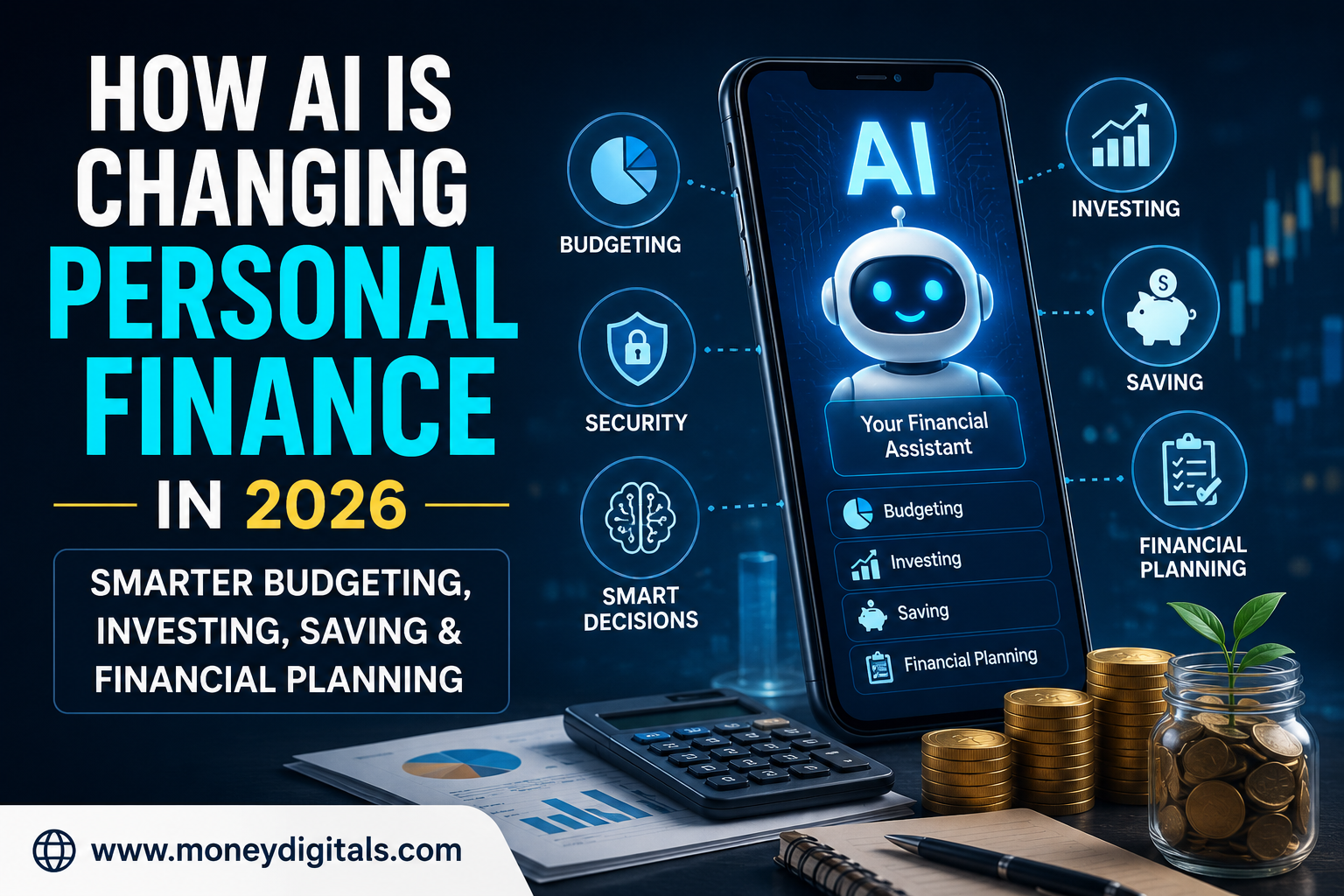
Artificial Intelligence (AI) is no longer limited to chatbots or automation. In 2026, AI has become an essential part of personal finance, helping millions of people make smarter financial decisions every day. From intelligent budgeting and automated savings to investment analysis and fraud detection, AI-powered tools are transforming the way individuals manage money.
Whether you are a student planning your monthly expenses, a salaried employee looking to build wealth, a freelancer managing irregular income, or an investor seeking data-driven insights, AI can simplify complex financial decisions. Instead of relying solely on manual calculations or traditional financial advice, users can now access real-time recommendations powered by machine learning and predictive analytics.
However, AI is not a magic solution. While it offers speed, automation, and personalized suggestions, it also comes with risks such as inaccurate predictions, privacy concerns, and AI-powered financial scams. Understanding both the opportunities and limitations of AI is essential before relying on it for important financial decisions.
What Is AI in Personal Finance?
AI in personal finance refers to the use of machine learning, natural language processing, predictive analytics, and automation to help individuals manage their money more effectively. Instead of manually tracking expenses, calculating budgets, or researching investment opportunities, AI-powered platforms analyze large amounts of financial data and provide personalized recommendations within seconds.
Modern financial applications use AI to identify spending patterns, forecast future expenses, monitor subscriptions, detect unusual transactions, optimize savings, and even suggest investment portfolios based on a user’s financial goals and risk tolerance.
How AI Works Behind the Scenes
Most AI-powered finance platforms follow a simple process:
- Collect financial data from linked bank accounts and user inputs.
- Analyze spending habits using machine learning algorithms.
- Identify recurring expenses and unnecessary spending.
- Predict future cash flow based on historical behavior.
- Provide personalized financial recommendations.
- Continuously improve suggestions as more data becomes available.
Unlike traditional budgeting methods, AI continuously learns from user behavior, making recommendations more accurate over time.
Why AI Is Becoming Essential for Money Management
Managing personal finances has become increasingly complicated due to digital payments, multiple bank accounts, online investments, credit cards, subscriptions, and changing market conditions. AI reduces this complexity by automating repetitive financial tasks and presenting meaningful insights in an easy-to-understand format.
Instead of spending hours maintaining spreadsheets, users can receive instant spending summaries, budget alerts, investment insights, and personalized saving recommendations directly through AI-powered applications.
Major Benefits of AI in Personal Finance
- Automatic expense categorization.
- Real-time budget tracking.
- Smart saving recommendations.
- Personalized financial planning.
- AI-powered investment insights.
- Fraud detection and transaction monitoring.
- Debt repayment optimization.
- Tax planning assistance.
- Retirement planning support.
- 24/7 financial assistance through AI chatbots.
How AI Helps You Build Better Financial Habits
One of the biggest advantages of AI is behavior analysis. Instead of only showing how much money you spent, AI explains where your money goes, identifies unhealthy spending patterns, and suggests practical ways to improve your financial discipline.
For example, if a user frequently spends money on food delivery, AI may recommend setting a monthly dining budget or suggest cooking at home more often. Similarly, if monthly subscriptions remain unused, AI can recommend cancelling them to increase savings.
AI-Powered Budgeting: Smarter Than Traditional Budgeting
Traditional budgeting often requires manually recording every expense, which can be time-consuming and inconsistent. AI-powered budgeting apps automate this process by categorizing transactions, tracking monthly spending, and sending alerts whenever users approach their budget limits.
Many modern budgeting platforms also generate personalized financial reports, helping users understand where adjustments can be made to improve long-term financial health.
AI in Investing: Smarter Decisions, Not Guaranteed Profits
Artificial Intelligence has significantly transformed the investment industry. Instead of manually analyzing hundreds of companies, financial statements, market news, and technical charts, investors can now use AI-powered tools to process massive amounts of information within seconds.
AI can identify market trends, compare company fundamentals, analyze historical price movements, detect unusual trading activity, and provide data-driven insights. However, it’s important to remember that AI cannot accurately predict the future. Market movements are influenced by economic events, government policies, geopolitical developments, and investor sentiment, which means every investment carries risk regardless of AI recommendations.
- Portfolio analysis
- Risk assessment
- Market trend identification
- Investment diversification suggestions
- Long-term wealth planning
- Performance monitoring
AI in Stock Market Research
Professional investors and analysts increasingly use AI to improve research efficiency. AI systems can quickly process annual reports, earnings announcements, news articles, analyst reports, and macroeconomic data to identify patterns that might take humans much longer to discover.
For retail investors, AI acts as a research assistant rather than a replacement for independent analysis. Investors should always verify information through official company filings and trusted financial sources before making investment decisions.
How AI Helps You Save More Money
Saving money consistently is one of the biggest financial challenges for many people. AI-powered finance apps help users develop better saving habits by monitoring income, expenses, and recurring payments.
Instead of waiting until the end of the month, AI can recommend setting aside small amounts whenever income is received or spending remains below the planned budget. These small adjustments can gradually build a stronger emergency fund over time.
- Automatic savings recommendations
- Emergency fund planning
- Subscription tracking
- Monthly saving targets
- Cash flow forecasting
- Expense optimization
AI in Banking
Banks around the world now use Artificial Intelligence to improve customer service, enhance security, and reduce fraud. AI-powered virtual assistants answer customer queries instantly, while fraud detection systems monitor unusual transactions in real time.
Many banking applications also provide personalized spending reports, financial insights, loan recommendations, and credit management features based on customer behavior.
Common banking applications of AI include:
- 24×7 customer support
- Fraud detection
- Instant transaction alerts
- Loan eligibility analysis
- Personalized financial insights
- Automated document verification
Can AI Help Improve Your Credit Score?
AI cannot directly increase your credit score, but it can help improve the financial habits that influence it. By monitoring payment schedules, reminding users about upcoming EMIs, reducing unnecessary debt, and improving budgeting, AI supports healthier credit management.
Some finance applications also estimate how different financial decisions may affect your credit profile, allowing users to make more informed borrowing decisions.
AI and Financial Planning
Financial planning traditionally required meetings with advisors and extensive paperwork. Today, AI-powered planning tools simplify this process by helping users set financial goals, estimate future expenses, calculate retirement needs, and monitor investment progress.
Whether your goal is buying a home, funding higher education, building retirement wealth, or creating multiple income sources, AI can generate personalized financial roadmaps based on your income, expenses, age, and long-term objectives.
Advantages of AI in Personal Finance
| Benefit | Impact |
|---|---|
| Automation | Reduces manual financial work. |
| Accuracy | Improves expense tracking and reporting. |
| Speed | Processes financial data instantly. |
| Personalization | Provides customized recommendations. |
| Fraud Detection | Improves account security. |
| Investment Analysis | Supports better research and decision-making. |
| Budget Planning | Encourages disciplined money management. |
Limitations of AI in Personal Finance
Despite its growing capabilities, AI should not be viewed as a replacement for human judgment. Financial markets remain unpredictable, and personal circumstances differ from one individual to another. AI recommendations should always be considered alongside professional advice and careful research.
- Cannot predict markets with certainty.
- Depends heavily on data quality.
- Privacy concerns if data is mishandled.
- Algorithmic bias may affect recommendations.
- Requires users to verify critical financial decisions independently.
AI-Powered Financial Scams: Stay Alert in 2026
As Artificial Intelligence becomes more advanced, cybercriminals are also using AI to create convincing financial scams. Fake investment platforms, deepfake videos, AI-generated emails, cloned websites, and voice impersonation scams have become increasingly sophisticated. Understanding these risks is just as important as learning how AI can improve your finances.
Before making any investment or sharing sensitive financial information, always verify the source through official websites and trusted institutions. Never rely solely on messages received through social media or messaging applications.
- Beware of AI-generated investment promises guaranteeing high returns.
- Verify website URLs before entering banking credentials.
- Enable two-factor authentication (2FA) on financial accounts.
- Avoid downloading unknown financial apps.
- Never share OTPs, PINs, or passwords.
- Cross-check financial advice with reliable sources.
Popular Uses of AI in Everyday Personal Finance
| Financial Activity | How AI Helps |
|---|---|
| Budgeting | Tracks expenses and creates spending reports. |
| Saving | Suggests automatic saving opportunities. |
| Investing | Provides market research and portfolio insights. |
| Banking | Improves customer support and fraud detection. |
| Credit Management | Reminds users about EMIs and bill payments. |
| Tax Planning | Organizes financial records and estimates tax obligations. |
| Retirement Planning | Projects future savings based on financial goals. |
Can AI Replace Financial Advisors?
AI has become an excellent assistant for managing personal finances, but it cannot completely replace experienced financial advisors. AI analyzes historical data and patterns, while professional advisors consider personal circumstances, legal requirements, tax implications, and emotional aspects of financial decision-making.
For most individuals, the best approach is combining AI-powered tools with independent research and professional advice whenever significant financial decisions are involved.
The Future of AI in Personal Finance (2026–2030)
Over the next few years, Artificial Intelligence is expected to become even more integrated into daily financial life. Personalized financial assistants may automatically manage budgets, optimize investments, identify unnecessary expenses, estimate retirement needs, and provide real-time financial coaching.
Banks, fintech companies, insurance providers, and investment platforms are expected to continue investing heavily in AI technologies to improve customer experience, security, and operational efficiency. However, responsible use of AI, strong cybersecurity practices, and transparent regulations will remain essential for protecting consumers.
Final Thoughts
Artificial Intelligence is transforming personal finance by making budgeting, saving, investing, and financial planning more efficient than ever before. Used wisely, AI can help individuals develop healthier financial habits, automate routine tasks, and make better-informed decisions.
At the same time, AI should be viewed as a support tool rather than a replacement for critical thinking. Combining technology with financial education and careful decision-making remains the most effective strategy for long-term financial success.
Frequently Asked Questions (FAQs)
What is AI in personal finance?
AI in personal finance refers to the use of artificial intelligence to help individuals manage budgeting, saving, investing, banking, and financial planning more efficiently.
Is AI safe for managing money?
Reputable financial platforms use advanced security measures, but users should always verify sources, protect personal information, and enable account security features such as two-factor authentication.
Can AI predict stock market prices accurately?
No. AI can analyze historical data and identify patterns, but it cannot predict future market movements with certainty.
Can AI improve my credit score?
AI cannot directly improve your credit score, but it can encourage better financial habits such as timely payments, budgeting, and debt management.
Should beginners use AI financial tools?
Yes. Beginners can benefit from AI-powered budgeting, expense tracking, savings planning, and educational financial insights, provided they continue learning and verify important decisions independently.
Will AI replace financial advisors completely?
Unlikely. AI is an excellent assistant, but human expertise remains valuable for complex financial planning, taxation, estate planning, and personalized investment advice.

Faiz Malik is the founder of Moneydigitals, where he simplifies stock market, crypto, and global investing for beginners. His mission is to help people build wealth smartly with practical insights and real-world strategies.